Hemp Hearts Shelf Life, Storage & Packaging for Food Production
Hemp hearts have a shelf life of 24 months when stored properly. But what does “stored properly” actually mean for a bulk ingredient, and how does it change once the packaging is opened? Whether you are storing a pallet in your warehouse or a batch in your production facility, the rules are simple but important.
Quick answer
Hemp hearts last 24 months from packaging date when stored cool, dry, and protected from sunlight. Because the outer hull is removed, the kernel’s fats are exposed to oxygen — making hemp hearts more susceptible to oxidation than whole seeds. Standard bulk packaging is 30 × 25 kg bags on a pallet (750 kg total). Once opened, reseal tightly and use within a reasonable timeframe. Hemp hearts do not require refrigeration, but cool and consistent temperatures extend shelf life.
How long do hemp hearts last?
Hemp hearts have a stated shelf life of 24 months from the packaging date. This is the standard for our organic hemp hearts, based on lab-verified stability testing. The “best before” date is printed on every bag and includes the lot number for full traceability.
The 24-month figure assumes the product is stored in its original, unopened packaging under recommended conditions. Once opened, the clock moves faster — the exposure to oxygen accelerates the natural oxidation process.
Hemp hearts are more susceptible to oxidation than whole hemp seeds because the de-hulling process removes the protective outer shell. The fats inside the kernel — healthy omega-3 and omega-6 fatty acids — are exposed to air. This is why proper storage matters more for hemp hearts than for whole seeds.
What are the optimal storage conditions for hemp hearts?
Warehouse storage (unopened pallets)
- Temperature: Cool and consistent — ideally below 15°C. Avoid temperature fluctuations that cause condensation inside the packaging.
- Humidity: Dry environment. Moisture is the enemy of shelf life.
- Light: Protected from direct sunlight. UV light accelerates oxidation of the fats.
- Placement: Away from walls and off the floor to allow air circulation around the pallet.
- Odours: Store away from strong-smelling materials. Hemp hearts can absorb odours from their surroundings.
After opening (production use)
- Reseal: Close the bag tightly after each use. A clip or tie works well.
- Transfer: For longer storage, transfer opened product into an airtight food-grade container.
- Location: Keep in a cool, dry pantry or storage area — not above ovens, near boilers, or in direct sunlight.
- Refrigeration: Not required, but a cool pantry or refrigerated storage can extend freshness after opening.
Shipping and transport considerations
During transport, hemp hearts are shipped in their original sealed packaging on standard pallets. Key considerations for maintaining quality during shipping:
- Container temperature: Avoid prolonged exposure to high temperatures during summer months or in unventilated containers.
- Moisture protection: Ensure the container is dry and free of condensation before loading.
- Stacking: Pallets should be stacked according to standard food-grade shipping practices — not compressed or damaged during handling.
- Documentation: Every shipment includes a certificate of analysis, organic certificate, and lot-specific documentation.
Once the shipment arrives, inspect the pallets for damage, check the best before dates, and move the product into proper storage as soon as possible.
What packaging formats are available for bulk buyers?
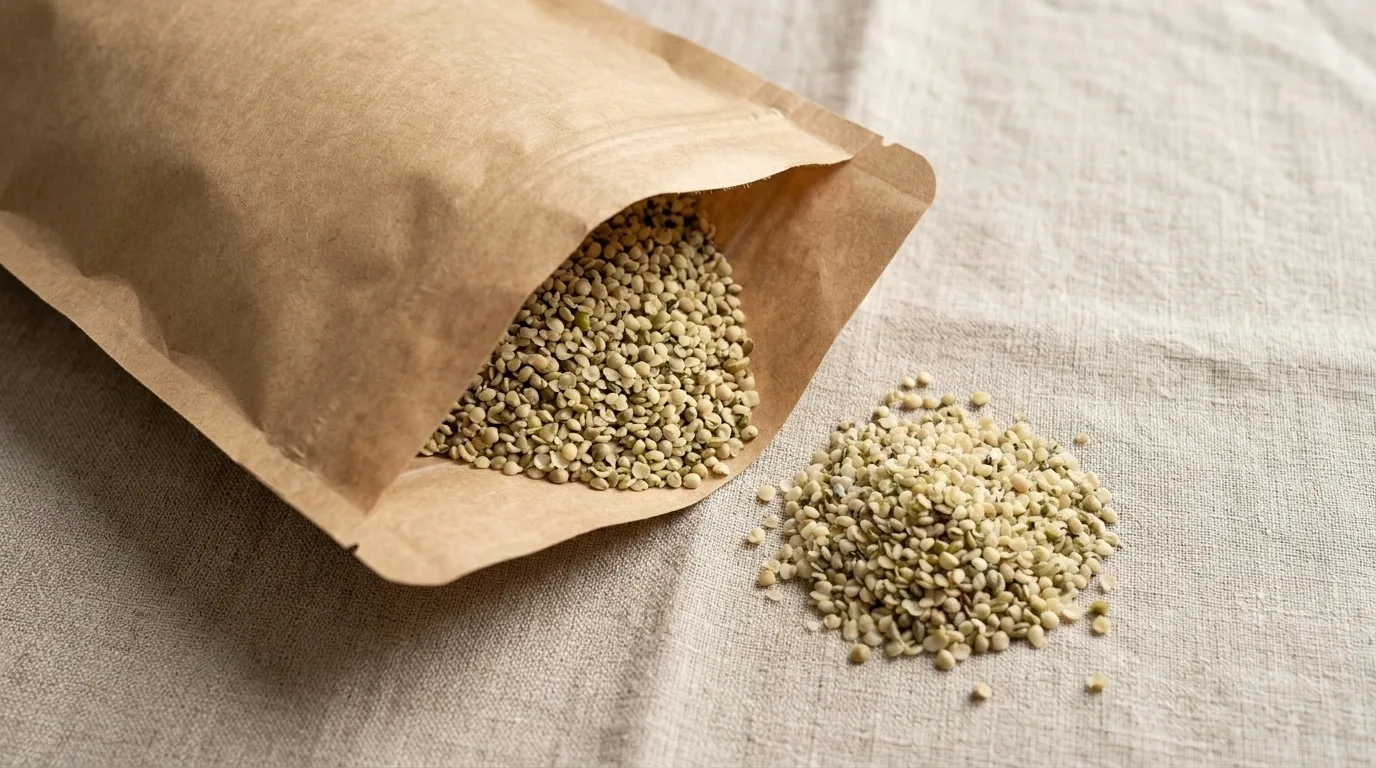
Standard bulk packaging for hemp hearts is 30 × 25 kg bags on a pallet (750 kg total). Each bag is food-grade plastic with a sealed inner liner, labelled with:
- Product name and ingredients
- Lot number and best before date
- Organic certification logo (EE-ÖKO-03)
- Nordic Hemp address and country of origin
Unlike whole hemp seeds, hemp hearts are not packed in Big Bags or super sacks. The 25 kg bag format is the standard because it preserves freshness better for smaller batch usage and is easier to handle on a production line.
Hemp hearts are also not nitrogen-flushed. The packaging is designed to be food-grade and sealed, but not modified atmosphere — which is another reason proper storage conditions matter.
When incorporating hemp hearts into a finished product (protein bars, smoothie powders, baked goods), the shelf life of the final product depends on the full formulation — not just the hemp hearts. The fats in hemp hearts can contribute to oxidation if the finished product is not properly packaged or stored.
How to tell if hemp hearts have gone bad
Hemp hearts that have passed their shelf life or been stored improperly will show clear signs:
- Smell: Fresh hemp hearts have a mild, nutty aroma. Rancid hemp hearts smell sharp, bitter, or similar to old paint.
- Taste: Rancid hemp hearts taste bitter and unpleasant. A small taste test is a reliable indicator.
- Appearance: Fresh hemp hearts are light green to cream-coloured. Darkening, spotting, or clumping can indicate moisture damage or oxidation.
- Texture: If the hearts feel greasy or sticky rather than dry and loose, the fats have begun to break down.
If you notice any of these signs, the product should not be used in food production.
Shelf life comparison: hemp hearts vs other seeds
| Product | Shelf Life | Key Consideration |
|---|---|---|
| Hemp hearts | 24 months | Susceptible to oxidation — hull removed |
| Whole hemp seeds | 24 months | Hull protects the kernel — more stable |
| Chia seeds | 24–36 months | Longest shelf life — high antioxidants |
| Flax seeds (whole) | 12–24 months | Shorter shelf life — higher omega-3 content |
| Flax seeds (ground) | 3–6 months | Very short — rapid oxidation after grinding |
Sources: Nordic Hemp product specifications. Chia and flax values from USDA FoodData Central and industry storage guidelines.
Common questions about hemp heart storage
Do hemp hearts need to be refrigerated?
No — refrigeration is not required. Hemp hearts should be stored cool, dry, and protected from sunlight. A cool pantry or dry storage area is sufficient. Refrigeration can extend freshness after opening but is not necessary for the 24-month shelf life in unopened packaging.
Can you freeze hemp hearts?
Yes — freezing is safe and can extend shelf life further. Place the hemp hearts in an airtight, freezer-safe container. When thawing, allow them to come to room temperature in the sealed container to avoid condensation. Frozen hemp hearts retain their nutritional profile and texture.
How long do hemp hearts last after opening?
Once opened, hemp hearts should be used within 3–6 months for best quality, provided the bag is resealed tightly after each use and stored in a cool, dry place. Transferring to an airtight container can extend this timeframe.
Do hemp hearts expire faster than whole seeds?
Yes — because the protective hull is removed, the fats in hemp hearts are exposed to oxygen. They are more susceptible to oxidation than whole hemp seeds. Both have a 24-month shelf life in unopened packaging, but hemp hearts degrade faster once exposed to air.
What is the best way to store bulk hemp hearts in a production facility?
Keep pallets in a cool, dry warehouse away from walls and direct sunlight. Do not store near heat sources, boilers, or areas with strong odours. Open only what you need for production and reseal bags immediately. For large facilities, consider transferring opened product into food-grade airtight containers.
Does organic certification affect shelf life?
No — organic certification does not change the shelf life of hemp hearts. The 24-month shelf life applies to both organic and conventional hemp hearts. What matters is storage conditions, not the farming method.
Need bulk hemp hearts with full specifications?
We supply organic hemp hearts in bulk to food manufacturers across Europe and worldwide. We regularly test our raw material and final products. Full documentation including shelf life and storage guidelines included with every order.
Request a quote →