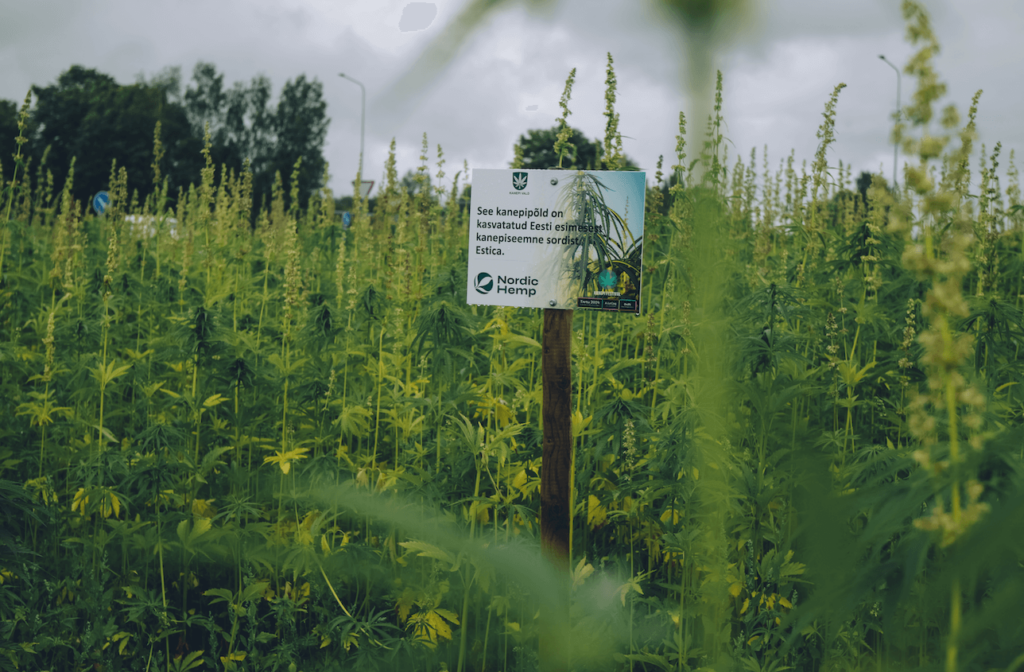
Hemp Hearts vs Chia Seeds vs Flax Seeds: Which Super Seed Is Best for Your Product?
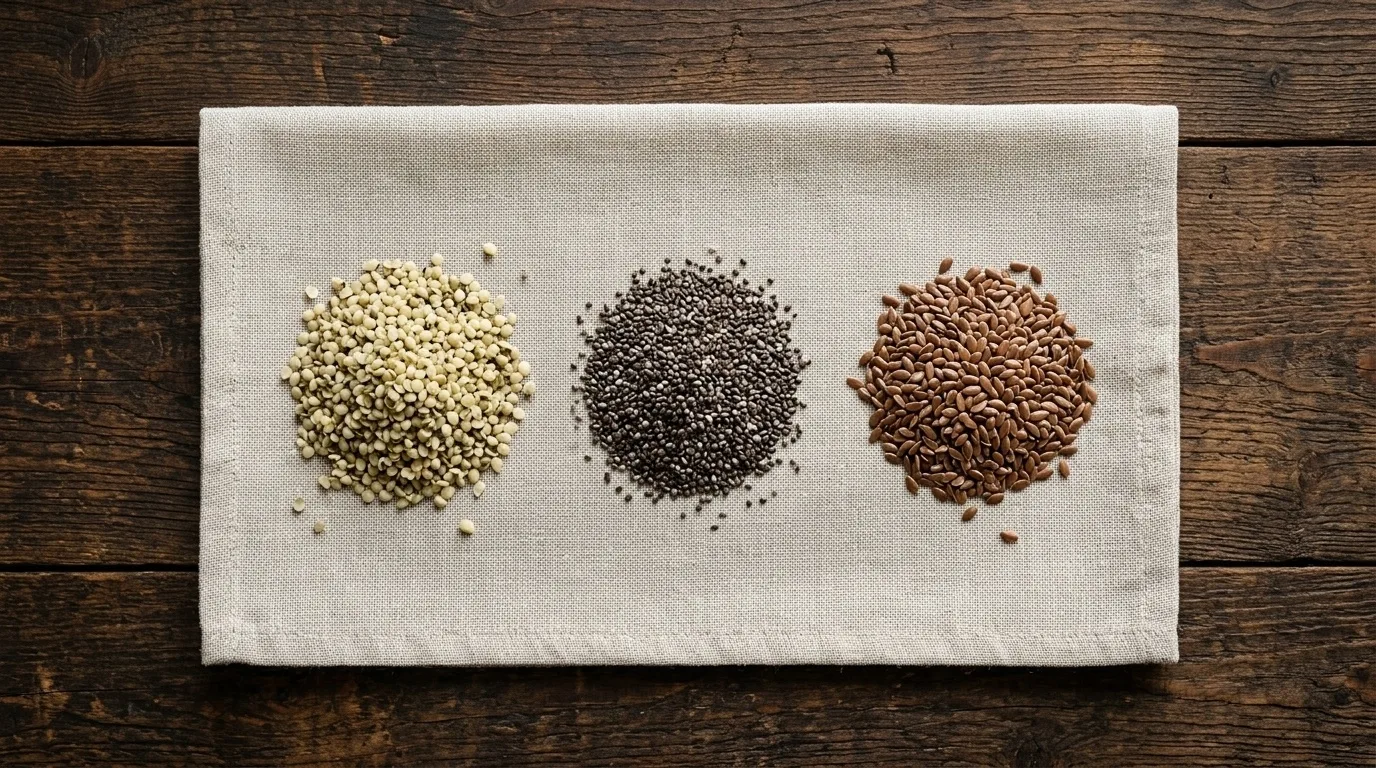
Hemp Hearts vs Chia Seeds vs Flax Seeds: Which Super Seed Is Best for Your Product?
Hemp hearts win on protein. Chia wins on omega-3. Flax wins on total fibre. There is no single best seed in the hemp hearts vs chia vs flax debate. The right choice depends on your application. For protein bars, smoothies, and plant-based milks, hemp hearts are the strongest option. For gelled products and omega-3 enrichment, choose chia. For baked goods and fibre-focused formulations, flax is the traditional choice. This guide compares all three using published nutritional data. For a broader look at their health benefits, read our in-depth guide on what makes hemp hearts so healthy.
How do hemp hearts compare nutritionally to chia and flax?
Below is a comparison per 100g based on published data. Hemp heart values come from our own lab-verified specifications. Chia and flax values come from USDA FoodData Central.
| Nutrient (per 100g) | Hemp Hearts | Chia Seeds | Flax Seeds |
|---|---|---|---|
| Protein | 34 g | 17 g | 18 g |
| Fat | 48.2 g | 31 g | 42 g |
| Crude fibre | ~8 g | 34 g | 27 g |
| Energy | 575 kcal | 486 kcal | 534 kcal |
| Omega-3 (ALA) | ~8 g | ~18 g | ~23 g |
| Omega-6 : Omega-3 ratio | 3:1 | 0.3:1 | 0.3:1 |
| Complete protein? | Yes | No | No |
| Texture in use | Creamy, soft | Gel-forming | Crunchy or ground |
| Shelf life | 24 months | 24–36 months | 12–24 months |
Sources: Hemp hearts: Nordic Hemp product specifications (lab-verified, 2026). Chia seeds: USDA FoodData Central (SR Legacy, 162990). Flax seeds: USDA FoodData Central (SR Legacy, 169906). Omega-3 values are approximate.
Why do hemp hearts win on protein?
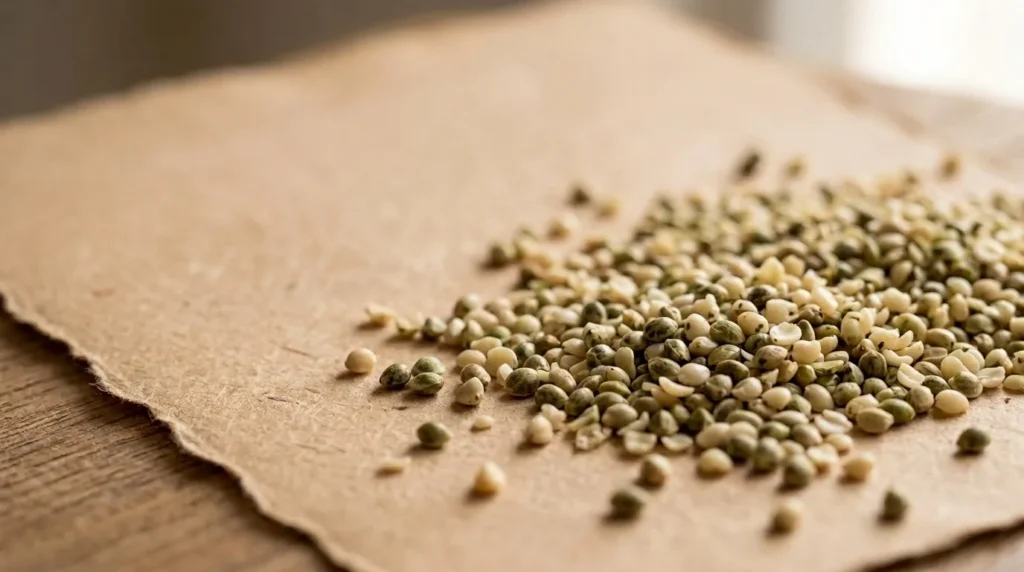
Hemp hearts contain 34g of protein per 100g. This is nearly double that of chia or flax seeds. A 2026 study in Frontiers in Nutrition found that de-hulling concentrates protein. It reported 33.78% protein in hulled seeds versus 25.14% in whole seeds.
Hemp hearts are a complete protein. They contain all nine essential amino acids. Chia and flax are not complete proteins. Both are limited in lysine. They need to be combined with other protein sources.
Omega-3: chia and flax lead, but hemp has the best ratio
Chia and flax seeds are known for their ALA content. Flax seeds have the highest amount at approximately 23g per 100g. Chia has 18g. Hemp hearts have 8g.
Hemp hearts have the best omega-6 to omega-3 ratio. It is 3:1. This aligns with nutritional guidelines for reducing inflammation. Chia and flax have ratios closer to 0.3:1. They are very high in omega-3 relative to omega-6.
All three are excellent sources of essential fatty acids. The choice depends on your goal. For total omega-3 content, pick flax or chia. For the best ratio, pick hemp hearts.
Fibre: flax and chia win, but hemp hearts have less phytic acid
Chia seeds (34g per 100g) and flax seeds (27g) are higher in fibre than hemp hearts (~8g). If your product is marketed for digestive health, chia or flax are the stronger choice.
High-fibre seeds contain more phytic acid. This binds to minerals like iron, zinc, and calcium. It reduces their bioavailability. Hemp hearts contain only 202 mg of phytic acid per 100g. Chia and flax have significantly higher levels. For products where mineral absorption matters, hemp hearts offer a cleaner profile.
Which seed for which product?
Here is a practical recommendation based on how each seed behaves in production.
- Protein bars — blends without grinding, soft texture
- Smoothie powders — dissolves easily, no gel formation
- Plant-based milks — creamy mouthfeel, no straining
- Baked goods — maintains texture, no pre-treatment needed
- Puddings and desserts — natural gel formation
- Beverages — stabiliser and thickener
- Egg replacement in vegan baking — binds ingredients
- Omega-3 enriched products
- Baked goods (whole) — crunchy topping
- Flax meal (ground) — fibre booster in batters
- Egg replacement (ground + water) — gel formation
- Digestive health products
All three seeds behave differently in production. Hemp hearts require no grinding or pre-processing. They blend directly into formulations as-is. Chia seeds need liquid contact and time to form a gel. Flax seeds must be ground first. Ground flax also has a shorter shelf life. These handling differences affect your production line and storage costs.
Common questions about these super seeds
Which seed has the most protein?
Hemp hearts have the most protein at 34g per 100g. This is roughly double that of chia (17g) or flax (18g). Hemp hearts are also the only complete protein among the three. They contain all nine essential amino acids.
Can I substitute hemp hearts for chia or flax?
It depends on the application. Hemp hearts do not form a gel. They cannot replace chia or flax in puddings or egg replacement. For smoothies, protein bars, or baked goods, they can be substituted. Adjust the amount to match your protein or fat target.
Which seed is best for omega-3?
Flax seeds have the highest total omega-3 content. Chia seeds are second. Hemp hearts have the best omega-6 to omega-3 ratio (3:1). This ratio is optimal for human health.
Do any of these seeds contain THC?
Both THC and CBD are naturally present in hemp hearts at trace levels — well below the EU limit of 3 mg/kg. Chia and flax are not related to Cannabis and contain no THC at all.
Which seed has the longest shelf life?
Chia seeds last the longest. Their shelf life is 24–36 months. Hemp hearts last 24 months when stored cool and dry. Whole flax seeds last 12–24 months. Ground flax oxidises faster and should be used within 3–6 months.
Are organic hemp hearts certified?
Yes — Nordic Hemp supplies organic hemp hearts from our Estica, RAK and Finola varieties. They are EU Organic certified (EE-ÖKO-03) and BRCGS food safety certified. Chia and flax seeds are also widely available in organic grades from their respective producers.
Looking for bulk hemp hearts?
We supply organic hemp hearts to food manufacturers worldwide. We regularly test our raw material and final products. Full documentation included with every order.
Request a quote →