Hemp Hearts: The Complete Ingredient Guide for Food Manufacturers
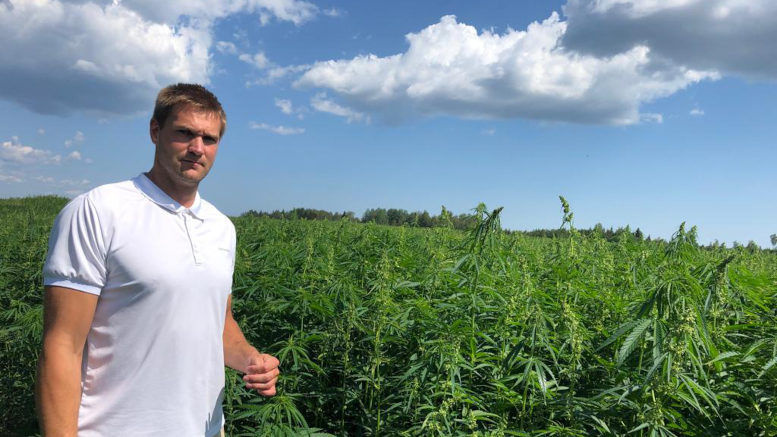
By Sander Kuusk · Updated July 22, 2026
If you are formulating a new product or sourcing plant-based ingredients, hemp hearts are one of the most versatile options available. They are the soft, creamy kernel inside the hemp seed — sometimes called hulled hemp seeds or hemp kernels. Food manufacturers choose them for their complete protein profile, clean label compatibility, and 24-month shelf life. For a detailed overview of their nutritional profile and health benefits, see our detailed guide to hemp hearts.
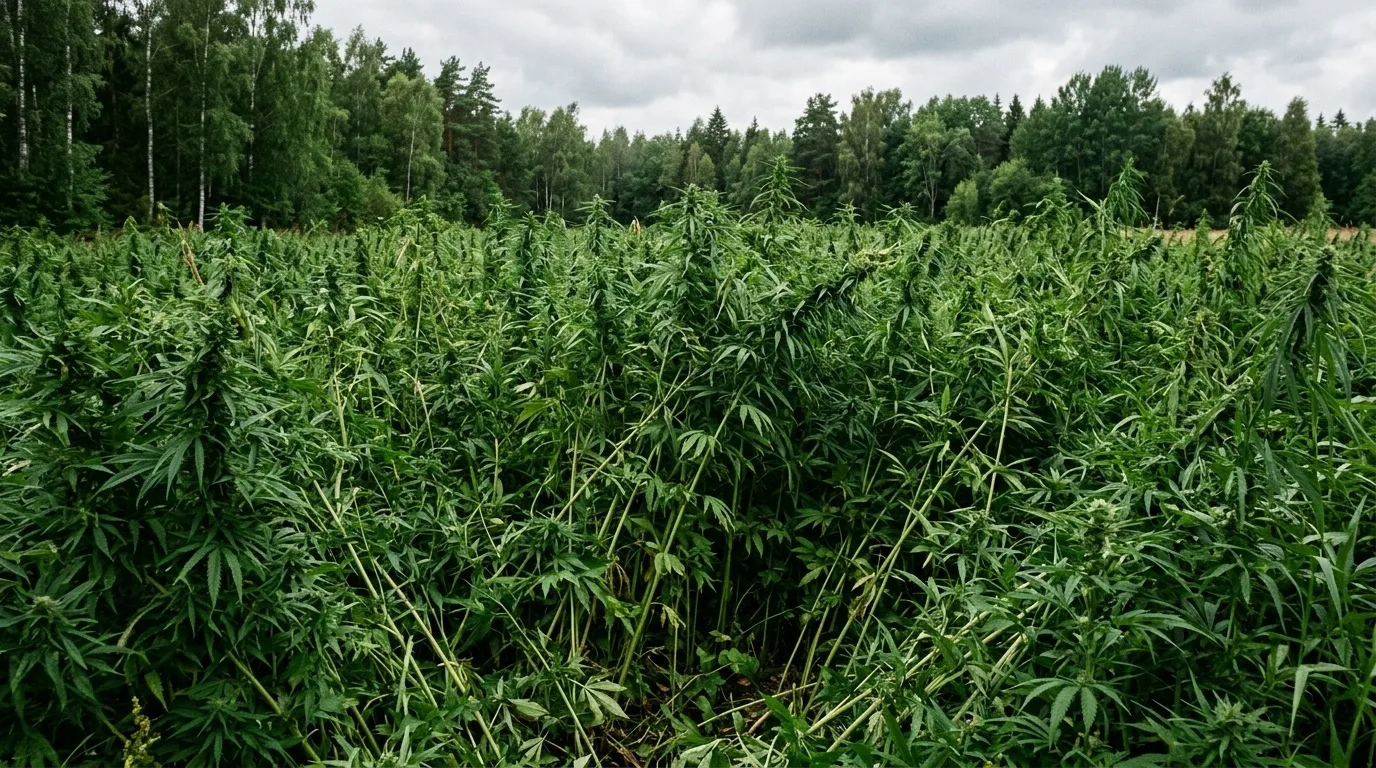
At Nordic Hemp, our hemp hearts are the hulled kernels from our Estica, RAK and Finola hemp varieties, grown on Estonian farmland. We process thousands of tonnes of organic hemp hearts every year for food manufacturers and private-label brands across Europe.
Hemp hearts — also called hulled hemp seeds, shelled hemp seeds, or hemp kernels — are the soft, creamy inner part of the hemp seed (Cannabis sativa) with the hard outer shell mechanically removed. They contain approximately 34g of protein per 100g, 48.2g of fat per 100g (mostly polyunsaturated omega-3 and omega-6), and all nine essential amino acids. Both THC and CBD are naturally present in hemp hearts at trace levels. THC is tested and remains below the EU legal limit of 3 mg/kg for seeds. CBD is present at naturally occurring levels.
What are hemp hearts?
Hemp hearts — also called hulled hemp seeds, shelled hemp seeds, or hemp kernels — are the soft, creamy inner part of the hemp seed (Cannabis sativa) with the hard outer shell mechanically removed. The hull makes up roughly 35% of the seed by weight and consists mainly of fiber. Removing it concentrates the protein and fat that are found in the kernel, which is why hemp hearts are more nutrient-dense than whole hemp seeds.
You might see them sold under different names — hemp hearts, hulled hemp seeds, shelled hemp seeds, de-shelled hemp seeds, or hemp nuts. They all refer to the same product: the inner kernel after the outer hull has been removed.
Do hemp hearts contain THC or CBD?
Both THC and CBD are naturally present in hemp hearts at trace levels. THC is regularly tested and stays below the EU legal limit of 3 mg/kg for seeds. CBD is present at naturally occurring levels. All our products are lab-tested and consistently register below 3 mg/kg THC in seeds, with most batches testing at 0.1 mg/kg to well below 3 mg/kg.
For a full breakdown of the EU THC regulations for hemp seeds, see our detailed guide: All you need to know about new THC regulations in EU from 01.2023.
The THC that exists in the hemp plant is concentrated in the leaves and flowers, not in the seeds. During seed cleaning and de-hulling, any residual plant material is removed. All Nordic Hemp products are lab-tested and will not make you high.
How are hemp hearts made?
The de-hulling process is entirely mechanical — no chemicals, no heat, no solvents. At our facility in Estonia, whole seeds move through several stages before they become clean hemp hearts.
Hemp hearts nutrition facts
Here is the typical nutritional profile per 100g of our organic hemp hearts, based on our lab-verified product specifications:
| Nutrient (per 100g) | Value |
|---|---|
| Energy | 2459 kJ / 575 kcal |
| Protein | 34 g |
| Fat | 48.2 g |
| Polyunsaturated fat | 38 g |
| Omega-6 (linoleic acid) | ~10 g |
| Omega-3 (alpha-linolenic acid) | ~3 g |
| Carbohydrates | 5–7 g |
| Dietary fiber | ~8 g |
| Salt | 0.003 g |
| Moisture | 6.5–8% |
Source: Nordic Hemp product specifications (lab-verified, 2026). Omega fatty acid distribution based on USDA FoodData Central data for hulled hemp seeds.
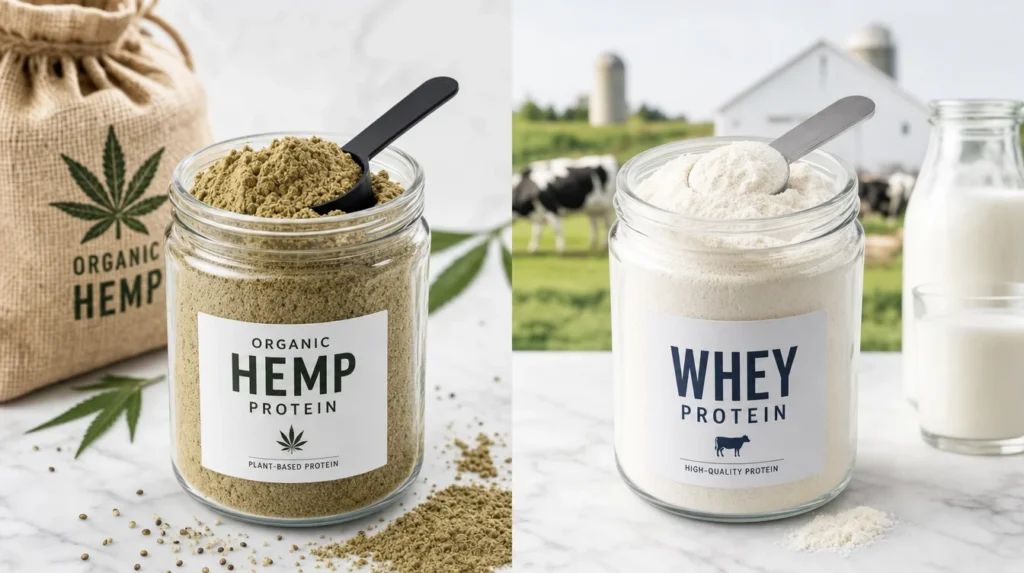
The protein in hemp hearts contains all nine essential amino acids — the building blocks our body cannot make on its own and must get from food. The PDCAAS score (a measure of protein digestibility and quality) is 0.63–0.66 for hemp hearts — lower than animal proteins like whey or egg, but higher than many other plant proteins.
Hemp hearts vs whole hemp seeds: what changes?
The main difference between hemp hearts and whole hemp seeds is the hull. Removing it concentrates the protein and fat while reducing fiber. Here is how they compare per 100g, based on our product specifications:
| Nutrient (per 100g) | Hemp Hearts | Whole Seeds |
|---|---|---|
| Protein | 34 g | 30 g |
| Fat | 48.2 g | 43.9 g |
| Crude fiber | ~8 g | ~25 g |
| Energy | 575 kcal | 575 kcal |
| Carbohydrates | 5–7 g | 23.3 g |
| PDCAAS | 0.63–0.66 | 0.49–0.53 |
| Shelf life | 24 months | 24 months |
Source: Nordic Hemp product specifications. PDCAAS values from House et al., Journal of Agricultural and Food Chemistry (2010).
How to use hemp hearts
Hemp hearts are incredibly versatile. Their mild, nutty flavour and soft, creamy texture make them easy to incorporate into almost any food product.
For food manufacturers:
- Protein bars, energy bars, and snack bars
- Plant-based protein powders and smoothie blends
- Hemp milk and dairy alternatives
- Granola, muesli, and breakfast cereals
- Bakery products — bread, cookies, crackers
For home use:
- Sprinkle on salads, yoghurt, or oatmeal
- Blend into smoothies
- Add to baking — bread, muffins, cookies
Unlike chia or flax seeds, hemp hearts do not absorb water and do not form a gel. They maintain their texture in food products, which makes them easier to work with in formulations.
Where to buy hemp hearts in bulk
If you are a food manufacturer, wholesaler, or private-label brand looking for a reliable bulk supplier, here is what to look for:
- Consistent supply. At Nordic Hemp, we work with a co-operation of the largest hemp farmers in Estonia, giving us stable supply year after year.
- Certifications. EU Organic (EE-ÖKO-03) and BRCGS food safety.
- Lab testing. We regularly test our raw material and final products.
- Packaging. 30 × 25 kg bags (750 kg).
- Variety. Estica, RAK and Finola — Nordic-adapted varieties for consistent quality. RAK is our newest variety, registered in the EU Common Catalogue of agricultural plant species, and we are the sole official distributor of RAK planting seeds.
Looking for bulk hemp hearts?
We supply organic hemp hearts in bulk to food manufacturers across Europe.
Request a quote →Common questions about hemp hearts
Are hemp hearts and hulled hemp seeds the same thing?
Yes. Hemp hearts, hulled hemp seeds, shelled hemp seeds, and de-shelled hemp seeds are all names for the same product — the soft inner kernel of the hemp seed with the outer hull removed.
Do hemp hearts contain THC or CBD?
Yes — both THC and CBD are naturally present in hemp hearts at trace levels. THC is regularly tested and remains below the EU legal limit of 3 mg/kg for seeds. CBD is present at naturally occurring levels and is not regulated in the EU, but we document it for markets such as Asia that require separate testing. They are made from industrial hemp varieties where THC has been bred to trace levels well below the EU legal limit of 3 mg/kg for seeds. All Nordic Hemp products are lab-tested and will not make you high.
How long do hemp hearts last?
Hemp hearts have a shelf life of 24 months when stored cool, dry, and protected from sunlight. Proper storage — cool, dry, and protected from sunlight — is important for maintaining freshness.
Are hemp hearts a complete protein?
Yes — hemp hearts contain all nine essential amino acids. The PDCAAS score is 0.63–0.66, which is better than many other plant proteins but lower than animal proteins like whey or egg.
What is the difference between organic and conventional?
Organic hemp hearts are grown without synthetic fertilizers, pesticides, or herbicides, and are certified by an organic control body (EE-ÖKO-03). Both are food-grade and safe.