Hemp Seed Oil for Hair Care Manufacturers: A Formulation Guide (2026)
Last updated: October 12, 2026
Hemp seed oil has moved into hair care the same way it moved into skincare: quietly, and then everywhere. It shows up in shampoos, conditioners, scalp treatments, leave-in oils and beard products, and formulators keep coming back to it for the same reasons. It brings a rare fatty acid profile, it feels light on the strand, and it gives a brand something specific to say about where the ingredient comes from.
If your development team is evaluating hemp seed oil for a hair care range, this guide covers what the oil actually does on the scalp and the strand, how it behaves in surfactant and conditioning systems, which product types it suits, and what to specify when you buy it. Nordic Hemp cold-presses hemp seed oil in Estonia from hemp grown on our own fields, and we supply manufacturers worldwide.
Hemp seed oil works in hair care as a light, fast-absorbing emollient and scalp conditioner. It is high in linoleic acid (omega-6) with alpha-linolenic acid (omega-3) at roughly a 3:1 ratio, plus gamma-linolenic acid (GLA), vitamin E and phytosterols. It suits dry and flaky scalps, curly and frizzy hair, damaged or colour-treated strands and fine hair that cannot carry heavy oils. Use it at 1 to 5% in rinse-off shampoos and conditioners, 10 to 20% in leave-in treatments, and higher in scalp oils. What it does not do is grow hair. There is no sound clinical evidence that hemp seed oil changes hair growth, so build the claims around scalp comfort, moisture balance and shine.

What is hemp seed oil?
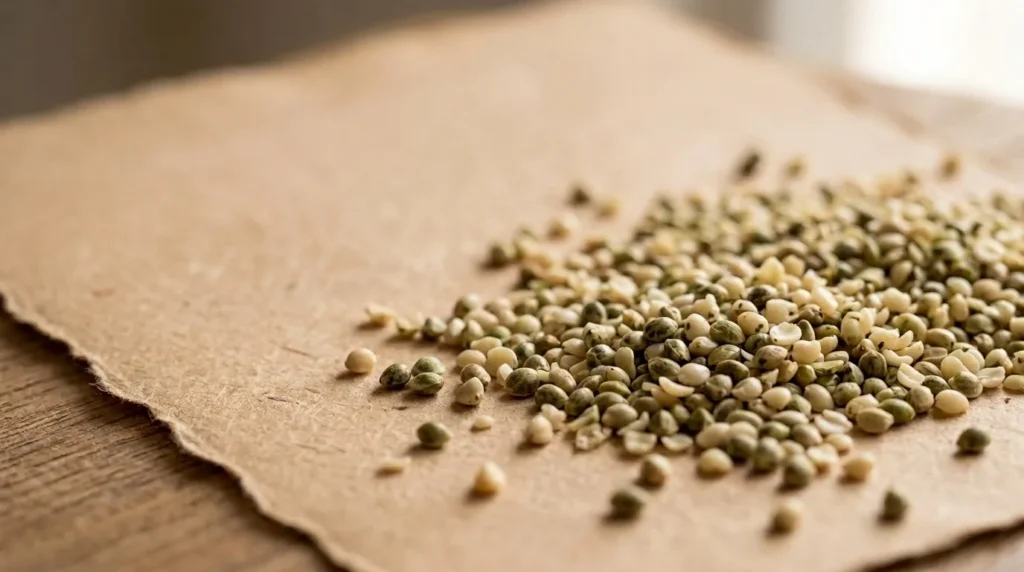
Hemp seed oil is a fixed oil pressed from hemp seeds. It is not an essential oil, and it is not an extract of the flowers or leaves. Everything in it comes from the seed, which is why its composition is built around fatty acids rather than aromatic compounds or resins.
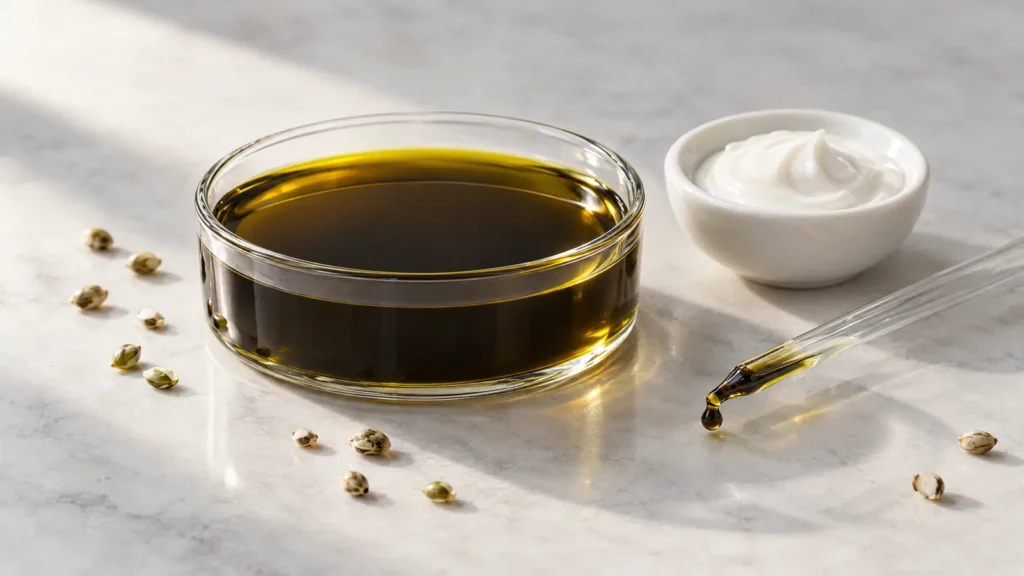
Cold pressing keeps the oil close to its natural state. The seeds are pressed at low temperature without solvents, so tocopherols, phytosterols and the full fatty acid profile stay in the oil. Refined hemp seed oil is paler and more neutral, but it also loses part of what makes the ingredient interesting in a personal care formula.
For a hair care formulator, that is the first decision: unrefined and characterful, or refined and neutral. Both exist, and both are legitimate depending on the product you are building.
How is hemp seed oil listed on a hair care label?
Every cosmetic ingredient carries an official INCI designation, and hemp seed oil has one. CosIng, the European Commission’s ingredient database, lists hemp seed oil with the functions “skin conditioning” and “emollient”, and records no restrictions on its use in cosmetic products.
Your supplier’s technical data sheet carries the exact INCI wording to print on the label, together with the CAS and EC numbers. Use it verbatim on the ingredient list and in the product information file. Retailers and distributors who audit claims expect the wording to match the official entry exactly, so copy it rather than typing from memory.
Hemp seed oil also has a clear regulatory position, which matters when you are answering retailer questions. It comes from the seed, not from the flower, and it is the form cosmetic brands have used in personal care for decades.
What does hemp seed oil do for hair?
Two things, and they are worth separating: what it does on the scalp, and what it does on the strand.
On the scalp, hemp seed oil is an emollient. It softens dry, tight or flaky skin and reduces the feeling of itchiness that comes with a dry scalp. Its GLA content is the ingredient of interest here, and its linoleic acid supports the skin barrier. Scalp comfort is the benefit a consumer can actually feel, and it is a defensible claim.
On the strand, it is a light conditioning oil. It smooths the cuticle, adds shine and improves combability without the weight that heavier oils bring. Because it absorbs instead of sitting on the surface, it also suits fine hair, which is where most oils fail.
What it does not do is grow hair. There is no sound clinical evidence that topical hemp seed oil increases hair growth or reverses hair loss. If a brief asks for growth claims, the honest formulation of the claim is stronger: the oil supports scalp comfort and helps keep the strand from breaking through dryness. Anything beyond that invites a complaint you cannot substantiate.
What fatty acids does hemp seed oil bring to hair care?
The reason hemp seed oil keeps appearing in hair products is its fatty acid balance. Typical values for a cold-pressed, unrefined oil look like this. The exact profile for the batch you receive is stated in the certificate of analysis that ships with it:
| Fatty acid | Typical share | What it does in a hair care formula |
|---|---|---|
| Linoleic acid (omega-6) | approx. 55 to 57% | Supports the scalp barrier, light and fast absorbing |
| Alpha-linolenic acid (omega-3) | approx. 17 to 19% | Contributes to the 3:1 omega ratio the oil is known for |
| Oleic acid (omega-9) | approx. 11 to 13% | Adds slip and softness without heaviness |
| Gamma-linolenic acid (GLA) | approx. 3 to 4% | Rare in seed oils, associated with calming reactive scalps |
| Palmitic and stearic acid | approx. 6% and 2% | Saturated fraction, gives the oil its body |
Two things stand out for hair care. First, the omega-6 to omega-3 ratio sits near 3:1, which supports a clean-label story about balance rather than a single hero fat. Second, hemp seed oil contains GLA, a fatty acid that is uncommon in plant oils and often the reason a brand chooses hemp over a simpler carrier.
The oil also carries natural tocopherols (vitamin E) and phytosterols. Those come with the seed, and they are part of why unrefined oil behaves differently from a stripped, refined base.
What does our hemp seed oil specification cover?
Every supplier should be able to put numbers behind the brochure. These are the figures from our own product specification for cold-pressed organic hemp seed oil:
| Parameter | Specification |
|---|---|
| Total fat | 99.76 g per 100 g |
| Energy | 3761 kJ / 899 kcal per 100 g |
| Moisture (max) | 0.5 % |
| Carbohydrates, protein, salt | 0 g per 100 g |
| Processing | Cold-pressed from whole hemp seeds, unrefined, no solvents |
| Ingredient statement | Organic hemp seed oil |
| Packaging | 1000 litre IBC containers |
| Storage | Cool, dry and protected from sunlight, away from walls |
The oil is certified organic (EU Organic, EE-ÖKO-03), non-GMO, laboratory tested and free from pesticides. We regularly test our raw material and final products, and a certificate of analysis accompanies the delivery, covering the fatty acid profile, peroxide value, water activity and microbiology. Your quality team can check the delivery against the specification rather than against a marketing page.
If you need the typical fatty acid percentages in writing before you place an order, ask for the technical data sheet. We provide it with the sample.
Which hair types and scalp conditions suit it?
Hemp seed oil is a good fit in formulas aimed at:
- Dry and flaky scalps, where the oil adds emollience without a heavy occlusive layer
- Fine hair, because it absorbs quickly instead of weighing the strand down
- Curly and frizzy hair, where the oil adds slip and helps define the curl
- Damaged or colour-treated hair, where cuticle smoothing improves feel and shine
- Sensitive or reactive scalps, where the GLA content is the ingredient of interest
What it is not suited to is a claim of density or regrowth. That is not what the oil does.
Where does hemp seed oil fit in a hair care range?
Different product types use different amounts of the oil, because the role changes. These are the ranges the market works with, and they are a useful starting point for your own trials:
| Product type | Typical use level | Role of the oil |
|---|---|---|
| Rinse-off shampoo | 1 to 5% | Mild conditioning, scalp comfort after washing |
| Rinse-off conditioner | 1 to 5% | Slip, combability, shine |
| Leave-in conditioner or serum | 10 to 20% | Light conditioning without build-up |
| Hair oil | 50 to 100% | Base oil, often blended with lighter esters |
| Scalp oil or treatment | 50 to 100% | Emollient treatment before washing |
| Hair mask | 5 to 15% | Rich treatment phase with occlusive butters |
| Beard oil | 20 to 50% | Softening the beard and the skin underneath |
Treat these as market practice, not as a specification. The right rate depends on your surfactant system, the sensory target and the claims on the pack, and it is your formulator who sets it.
Formulation notes: surfactants, pH and heat
Hemp seed oil behaves like a standard cosmetic oil, which is good news for development time:
- Surfactants: it is compatible with the usual anionic, amphoteric and non-ionic systems used in shampoos, so no special selection is needed
- Conditioning systems: it works alongside cationic conditioners, which carry the oil onto the strand in a rinse-off formula
- pH: the oil is stable across the pH range used in hair care, from acidic shampoos and scalp tonics to neutral formulations
- Heat: it tolerates standard processing temperatures, but keep the oil phase below 80 C to protect the polyunsaturated fatty acids
- Antioxidant: a low percentage of tocopherol gives extra oxidative protection, which matters most in emulsions where water introduces a second degradation pathway
- Stability testing: monitor peroxide value during accelerated testing. It is the clearest signal that your formulation is protecting the oil
Colour and scent: what to plan for
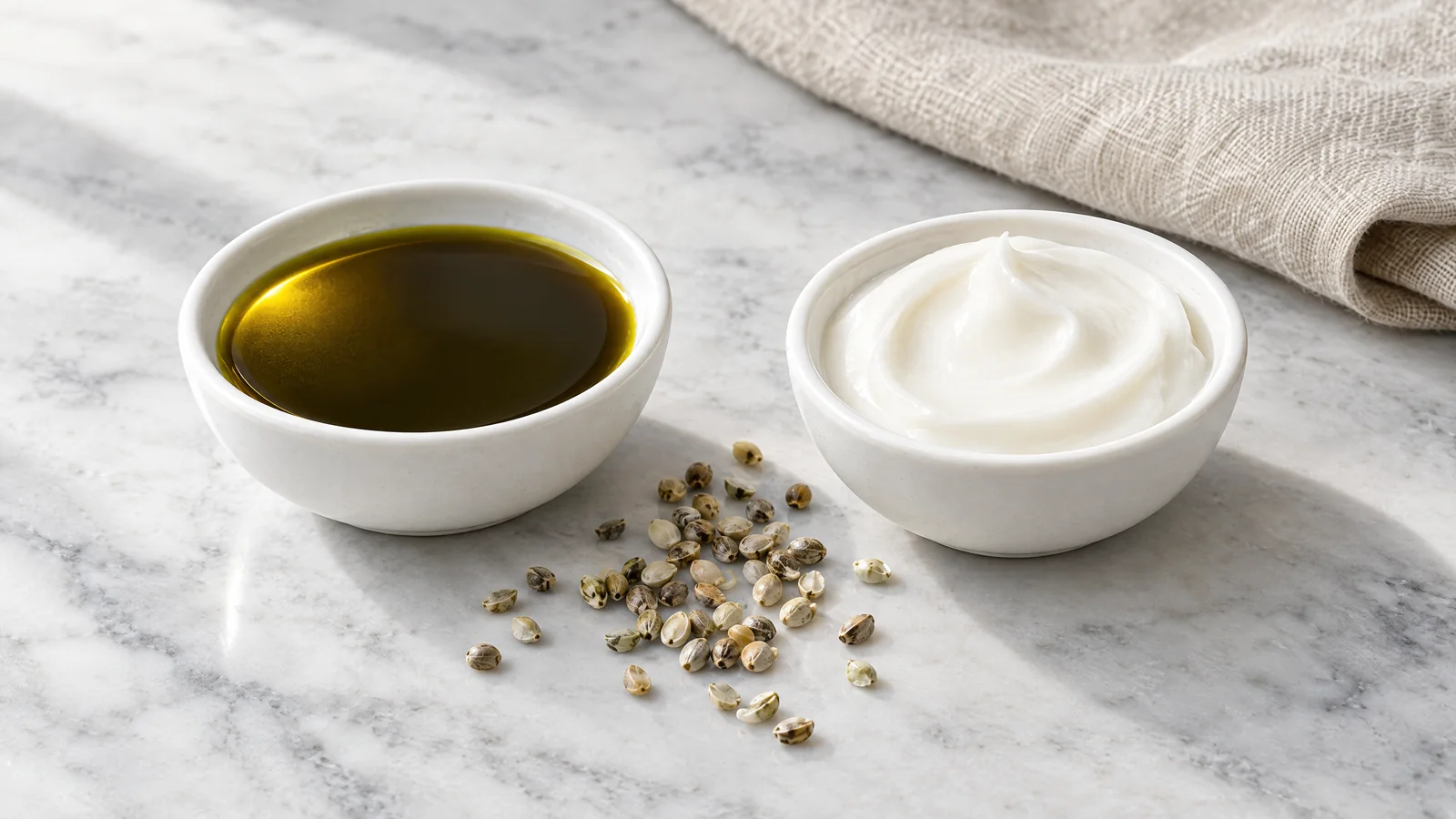
Cold-pressed, unrefined hemp seed oil is a dark green to brown oil with a mild, nutty scent. That is not a defect, it is what pressing seeds does. The pigments and the natural aroma come with the same process that preserves the fatty acids.
There are two ways to handle it, and both are common:
- Design around it. Use the oil in products where a plant-like colour and a nutty note are acceptable or even desirable, such as scalp oils, hair masks and beard oils
- Move to a lighter grade. If a shampoo or a serum needs to be pale and nearly odourless, talk to your supplier about refined or lighter-coloured options and adjust your claims accordingly
Ask for the colour specification and for a sample from the batch you will actually buy. The oil in your reference sample is not a guarantee for the next delivery.
Stability, oxidation and packaging
Hemp seed oil is high in polyunsaturated fat, which makes it oxidation sensitive. Handle it like the valuable ingredient it is:
- Keep it cool, dark and sealed, and store bulk containers away from heat sources
- Use opaque or amber packaging where the oil is a visible phase in a consumer product
- Check peroxide value as part of your incoming goods routine
- Plan your shelf life with your formulator. Our cold-pressed oil carries an 18 month shelf life from production when stored properly
- Remember that rinse-off systems dilute the oil and reduce the oxidation risk, while leave-in oils concentrate it
What should you specify when sourcing hemp seed oil?
When you move from testing to production, the specification matters more than the marketing page. Ask any supplier for these, and compare the answers:
- Process: cold-pressed and unrefined, or refined. Confirm the pressing temperature and whether solvents are used
- Specification sheet with the fatty acid profile, peroxide value, moisture and microbiology
- Certification: EU Organic (we hold EE-ÖKO-03) and food safety certification such as BRCGS if the same oil also goes into food projects
- Traceability: where the seed was grown, who pressed it, and how batches are identified
- Packaging and volumes: samples and small units for trial production, 1000 litre IBC containers for industrial volumes
- Logistics: whether the supplier ships worldwide and can hold a delivery schedule
Why origin and traceability matter in hair care
Hair care brands carry claims on the front of the pack: natural, vegan, sustainably sourced, made in Europe. Each of those claims has to be documented somewhere, and ingredient sourcing is usually where the weak link sits.
Nordic Hemp grows hemp on 5,000 hectares of Estonian farmland and presses the seed oil ourselves. That means the chain from field to IBC container runs through one company rather than three. For a brand that needs to explain where its hemp comes from, that is a practical advantage.
Claims and documentation your brand will need
Cosmetic claims get audited, so the ingredient paperwork has to hold up. These are the documents that matter for a hair care project:
- Organic certificate covering the oil you buy, with the certification body and certificate number
- Specification sheet and certificate of analysis for the batch you receive
- Technical data sheet and safety data sheet (TDS and MSDS) for your own product information file
- Declaration on processing, stating cold-pressed and unrefined if that is what your label says
- Traceability statement naming the country of origin and the pressing site
- Substantiation for your claims, which for hemp seed oil means scalp comfort, moisture balance and shine, not hair growth
Ask for the full pack before the first production order, not after. Suppliers who work with brands keep it ready.
Common questions from formulators
Does hemp seed oil help with hair?
Yes, as a conditioning and scalp-care ingredient. It softens a dry scalp, smooths the cuticle, adds shine and improves combability, and it does so without the weight of heavier oils. It does not increase hair growth, and claims in that direction cannot be substantiated.
How is hemp seed oil used in shampoos and conditioners?
In rinse-off formulas it is used at roughly 1 to 5% as part of the oil or conditioning phase. It is compatible with standard anionic, amphoteric and non-ionic surfactants, and it works with cationic conditioners that deposit the oil onto the strand during rinsing.
Can hemp seed oil be used on the scalp?
Yes, and that is where it performs best as a treatment. Scalp oils typically use it at 50 to 100%, applied before washing. Its GLA content and its linoleic acid make it suitable for dry, tight and flaky scalps.
Is hemp seed oil too heavy for fine hair?
No, it is one of the lighter options. It absorbs quickly instead of coating the strand, which is why it appears in products for fine hair where heavier oils would leave a greasy feel.
Does hemp seed oil work in a shampoo without separating?
Yes, at typical use levels it stays in the system with standard solubilisers and emulsifiers. If you load the oil heavily into a clear shampoo, you will need a solubiliser to keep the product transparent, which is a formulation decision rather than a limitation of the oil.
What is the shelf life of hemp seed oil in a hair care product?
Our cold-pressed oil carries an 18 month shelf life from production when stored cool, dark and sealed. In a finished product the shelf life depends on the full formulation: rinse-off systems dilute the oil, while leave-in oils and scalp treatments expose it to air continuously and need antioxidant support.
Is your hemp seed oil organic?
We hold EU Organic certification (EE-ÖKO-03), and our hemp seed oil is certified organic. The certificate and the specification are available on request.
Formulating a hair care range with hemp seed oil?
Nordic Hemp supplies cold-pressed, EU Organic-certified hemp seed oil to cosmetic and personal care manufacturers worldwide, in 1000 litre IBC containers.
Request the specificationSources
- Nordic Hemp: Cold-Pressed Hemp Seed Oil product page
- European Commission CosIng: hemp seed oil ingredient entry (skin conditioning and emollient)
- Pharmaceutics: Comprehensive Insight into Cutaneous Application of Hemp
- Journal of Cosmetic Medicine: regulatory and scientific insights into hemp seed extracts for skincare