Hemp Feed Fractions: Five Materials From One Seed
Last updated: November 27, 2026
Hempseed shells, smoothie hemp and whole-seed presscake are different materials. Their processing history, composition and physical form matter before a feed buyer compares protein figures or considers a ration.
Nordic Hemp Cooperation supplies feed materials alongside food ingredients made from hemp seed. This guide separates those products, identifies the basis of the available figures and links to more detailed material and feeding-study discussions.
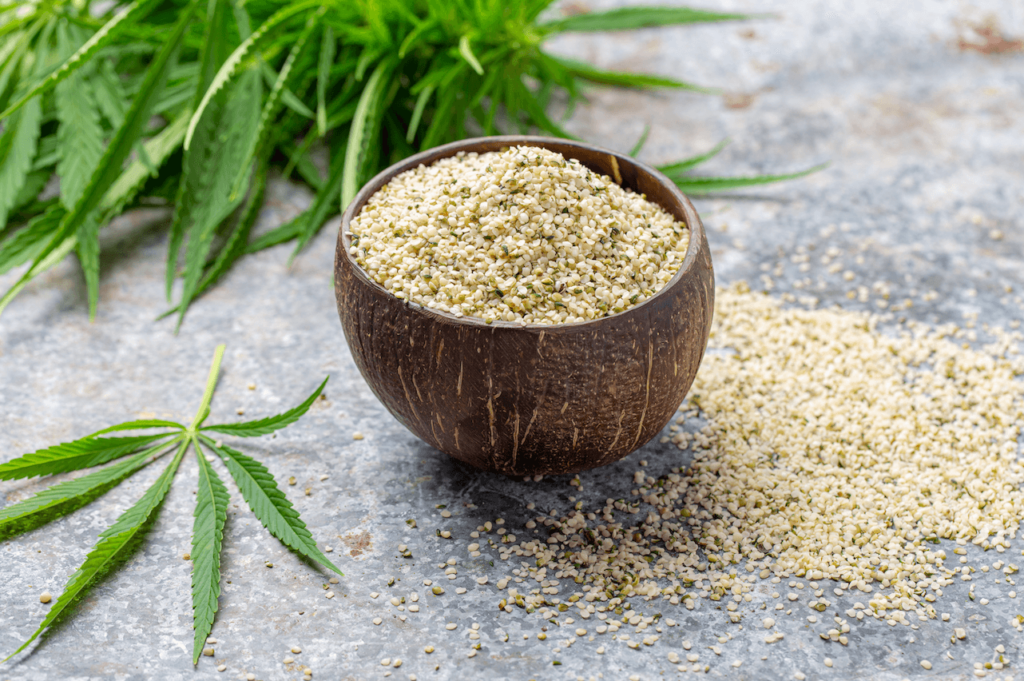
Dehulling produces hearts, shells and kernel fines. Pressing whole hemp seed produces oil and whole-seed presscake. Nordic Hemp cake is not the same material as the dehulled hemp meal used in a dairy study. Published feeding trials describe particular ingredients and complete diets; they do not establish inclusion rates for our cake, smoothie hemp or shells. Start with material identity, the reporting basis of its analysis and the evidence for the intended species.

- How do the processing routes differ?
- Five seed-derived materials, not five interchangeable feeds
- Composition and the basis of each figure
- What does the feeding evidence actually establish?
- How do you assess a fraction for your ration?
- Further reading by material and topic
- What belongs on the specification?
- Frequently asked questions
How do the processing routes differ?
Two processing routes need to be kept separate:
- Dehulling: mechanical dehulling breaks the seed coat. Separation produces kernels, shell material and kernel fines. Optical sorting is a separate sorting step after dehulling, not the operation that removes the coat.
- Whole-seed pressing: Nordic Hemp’s cake product page describes oil being pressed from whole hemp seed. The remaining solid material is whole-seed presscake and retains seed-coat material.
A dehulled meal described in a research paper must be identified separately. Its composition and processing cannot be assumed to match our whole-seed cake or dehulling fines.
Drying and storage are part of the raw-material history. Record the actual drying conditions and storage instructions for the material being offered. This guide does not set a universal temperature at which every hemp seed cracks, or apply a seed-drying moisture target to every finished fraction.
Five seed-derived materials, not five interchangeable feeds
Hemp hearts: dehulled kernels. Nordic Hemp sells them as a food ingredient, not as part of its feed range.
Whole-seed hemp cake: the solid material remaining after oil is mechanically pressed from whole seed. It is distinct from dehulled hemp meal.
Smoothie hemp: the green kernel fine fraction from dehulling, supplied as a loose material rather than a seed or pellet. Its specification must describe the offered material rather than borrow values from cake.
Hempseed shells: separated outer seed-coat material. Their usable energy and protein supply depend on composition, digestibility and animal species, not on the word fibre alone.
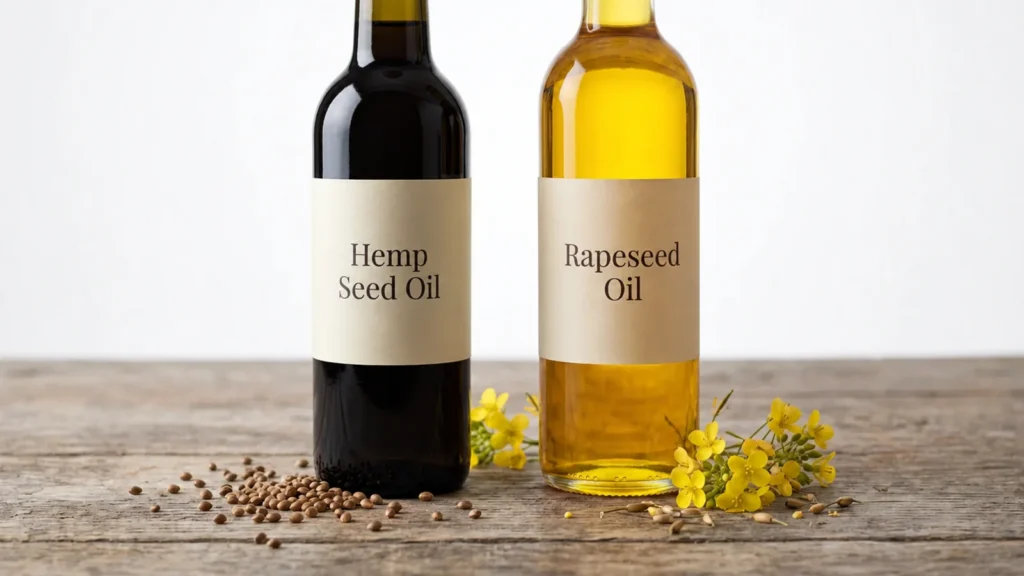
Hemp seed oil: a food ingredient in Nordic Hemp’s range, included here to explain the processing outputs. This page does not establish feed supply or suitability for a particular animal use.
Composition and the basis of each figure
| Material | Composition information | Source and analytical basis | How to use it |
|---|---|---|---|
| Whole-seed hemp cake | Protein, residual fat and seed-coat material; no universal composition assigned here. | Nordic Hemp product description. It identifies whole-seed pressing; use the agreed product specification for nutrient values. | Do not substitute dehulled-meal figures for this material. |
| Dehulled hemp meal | Study ingredient produced from dehulled seed; not assigned a Nordic Hemp specification here. | 2023 dairy study. Inclusion was expressed as a proportion of dietary dry matter. | A separate material used to describe research, not a guarantee of our cake composition. |
| Smoothie hemp | One analysed lot: 30.3% protein and 38.4% fat. | Nordic Hemp laboratory report, GBA certificate 25308690-001. Values are reproduced as reported; confirm the moisture basis and methods from the original report before formulation. | Sample data, not guaranteed limits. No dry-matter conversion or cross-product ranking is made here. |
| Hempseed shells | Published reference: about 14% crude protein. | AURI overview, dry-matter basis. Its hull figures came from an Evolve Hemp Hulls product, not Nordic Hemp shells. | Not our specification. No NDF value is supplied here without a separately traceable source. |
| Hemp seed oil | A concentrated fat ingredient. | Nordic Hemp markets its oil as a food ingredient. Exact composition must come from the relevant specification. | Included to explain seed processing, not to establish feed supply or suitability. |
Do not read this table as a single laboratory panel. A dry-matter result cannot be compared directly with an as-received result. A published value from another supplier is a reference, not a guaranteed Nordic Hemp specification.
Smoothie hemp fibre and shell NDF are not presented as comparable figures. The analytical method and reporting basis must first be confirmed from the relevant reports. Dietary fibre, crude fibre, NDF and ADF answer different questions.
The 2,131 kJ per 100 g value reported for smoothie hemp is calculated for food labelling. It is not measured gross energy and is not a feed metabolizable-energy (ME) or net-energy (NE) value. It should not be entered into ration software as either.
Crude protein does not establish digestible protein supply. Digestibility or nitrogen-fraction data for the material concerned are needed before estimating how much of that protein an animal can use.
What does the feeding evidence actually establish?
| Species | Published evidence described here | Potential role, not a recommendation | What remains unknown |
|---|---|---|---|
| Dairy cows | 2023 study: 12 Holstein cows, dehulled hemp meal at 15% of dietary dry matter; no significant milk-yield difference detected. | Nutrient supply must be assessed for the actual ingredient and whole ration. | This does not establish a rate for Nordic Hemp whole-seed cake, smoothie hemp or shells, or a result in beef cattle. |
| Laying hens | 2026 study: 280 hens in total, control and 30% cake diets, two pens per treatment, 16 weeks. | The tested cake contributed nutrients within a balanced diet. | Not a Nordic Hemp product trial or a universal 30% recommendation. Results cannot be extended to broilers. |
| Pigs and broilers | No product-specific trial is presented on this page. | Protein, fat and fibre contributions are possible assessment questions, not proof of suitability. | No validated inclusion level for Nordic Hemp smoothie hemp or shells is established here. |
| Horses | No equine trial is presented on this page. | A fibre-rich material would need equine-specific nutritional and safety assessment. | This page gives no feeding recommendation or inclusion rate for our shells or cake. |
The dairy result must remain attached to dehulled hemp meal, not transferred to our whole-seed cake. The laying-hen trial involved 280 birds in total; they did not all receive the hemp diet. The two pens per treatment also limit how broadly the performance result can be interpreted.
No significant difference detected under tested conditions is not proof that products are interchangeable or that the same result will occur in another ration. Fat and fibre matter, but so do amino acid supply, digestibility, animal stage, the rest of the diet and the requirements of the destination market.
How do you assess a fraction for your ration?
- Identify the material. Ask whether it comes from whole-seed pressing or dehulling, and confirm its physical form.
- Check the analysis. Establish the sample, reporting basis, methods and agreed specification limits. Separate measured sample results from guarantees.
- Match the evidence. Ask whether the published study used the same material and species. Do not copy an inclusion level from a different product.
- Assess the complete ration. A qualified nutritionist needs the actual composition and intended production stage before setting an inclusion rate.
- Confirm the delivery. Agree packaging, storage conditions, intended feed use and the documentation available for that product.
Further reading by material and topic
What belongs on the specification?
| Item | What to agree or request |
|---|---|
| Material identity | Whole-seed presscake, dehulling fines or separated shells. Keep these identities distinct. |
| Protein and fat | Product-specific limits, units, analytical methods and whether results are as received or on a dry-matter basis. |
| Fibre | Specify the method. Dietary fibre, crude fibre, NDF and ADF are not interchangeable. |
| Moisture and storage | A product-specific moisture limit and storage instructions. A seed-drying target is not a universal finished-product limit. |
| Fat quality | Where relevant, peroxide value and free fatty acid content, with methods and units. They describe different processes; free fatty acids are not an oxidation measurement. |
| Physical form | Agreed particle-size range, handling form and packaging for the offered material. |
| Analysis availability | Which results come from regular testing of raw material and finished product, the sample date and their relationship to the offered lot. |
| Organic status | For organic lots, confirm the applicable organic certification and traceability documents. Conventional supply is a separate option. |
| Intended feed use | Confirm the intended use, market and available documentation for the particular product; a food specification alone does not establish feed suitability. |
Incoming seed is quality-controlled at our Mustvee warehouse before processing at Vahi. That intake control is not the same as a promise to run a complete laboratory panel on every lot. We regularly test raw material and finished products; ask which results are available for the material on offer.
Nordic Hemp’s certification information includes EU Organic EE-ÖKO-03 and BRCGS (Brand Reputation through Compliance Global Standards). Certification scope and documents must be checked for the product and intended supply. Organic and conventional material should not be described as if they require the same organic documents.
Our company information describes a contracted growing base of 5,000 hectares. This is not a claim that all those hectares are company-owned or organic. Reported annual processing capacities are 3,000 tonnes for raw seed and 1,000 tonnes for dehulling; these are capacity figures, not the current year’s output or a guaranteed feed-product volume.
Frequently asked questions
What is the difference between hemp hearts and Nordic Hemp cake?
Hearts are the dehulled seed kernels. Nordic Hemp cake is the solid material remaining after oil is pressed from whole hemp seed, so it includes material from the seed coat. It is not the same ingredient as dehulled hemp meal used in the dairy study.
Does the 15 percent dairy trial apply to Nordic Hemp cake?
No. The 2023 trial tested dehulled hemp meal at 15 percent of dietary dry matter in 12 lactating Holstein cows. It did not test Nordic Hemp whole-seed cake or smoothie hemp. Its result does not establish an inclusion rate for either product.
What does the laying-hen study establish?
A 2026 study involving 280 hens compared a control diet with a diet containing 30 percent hemp cake over 16 weeks. No significant differences in laying performance were detected under the tested conditions. The trial did not test Nordic Hemp cake, and 30 percent is not a recommendation for our product.
Are hempseed shells recommended for every animal species?
No. A fibre-rich ingredient needs assessment for the particular species, production stage and complete ration. This page does not establish a validated inclusion rate for Nordic Hemp shells in cattle, poultry, pigs or horses.
What is smoothie hemp?
Smoothie hemp is the green kernel fine fraction from dehulling, supplied as a loose material rather than whole seed or pellets. One analysed Nordic Hemp lot contained 30.3 percent protein and 38.4 percent fat. These sample results are not guaranteed values for all lots or a feeding recommendation.
Can I compare all the figures directly?
Not without checking their basis and method. A dry-matter value differs from an as-received value, and dietary fibre, crude fibre, NDF and ADF are different measurements. Published reference values from another supplier are not Nordic Hemp specifications.
What should I request before ordering a feed fraction?
Confirm the material identity, intended feed use and market, agreed nutrient limits, analytical methods and reporting basis, moisture limit, physical form and storage conditions. Ask what analysis is available and how it relates to the offered material. For an organic lot, also confirm the applicable organic certification and traceability documents.
Ask about hemp feed fractions
Tell us the species, production stage, destination market and parameters you need. We can discuss the offered material, available analysis and documentation before you assess it for your ration.
Contact Nordic HempSources
- Nordic Hemp, Organic Hemp Cake product description: whole-seed pressing and product identity.
- Comparing dehulled hemp meal and canola meal as a protein supplement for lactating dairy cows. Journal of Dairy Science, 2023. Evidence applies to the study ingredient.
- Integrating hemp cake in organic layer diets: a comprehensive assessment of egg quality, hen behavior, production costs, and life cycle impact. Journal of Agriculture and Food Research, 2026. Control and hemp-cake diets, 280 birds in total.
- AURI, Opportunity for Hemp in Feed and Pet Food, 2019. Published dry-matter reference figures; hull values are from an Evolve Hemp Hulls product.
- Nordic Hemp laboratory report, GBA certificate 25308690-001, Smoothie 2.0 organic. Protein and fat results quoted for one sample. Confirm methods and reporting basis from the original document before using results in formulation.
- Nordic Hemp company process and capacity information. These operational descriptions are company information, not independent feeding evidence.