Feeding Dairy Cows Hemp Cake and Hulls: What the Trials Show
Last updated: November 13, 2026
Hemp seed cake and hempseed shells can both go into a dairy ration, and they do opposite jobs. The cake brings protein and residual fat, the shells bring fibre and rumen fill. That makes hemp in dairy rations a two-product question, not one.
This article sets out what the trials measured, what the wider literature adds, where the fat ceiling sits, and what belongs on the specification.
Yes, hemp can go into a dairy ration. Dehulled hemp meal replaced canola meal at 15 percent of dietary dry matter in 12 lactating Holstein cows with no change in milk yield, milk fat, milk protein or intake. Hempseed shells are a fibre material with about 65 percent NDF tested in sheep rather than cows. What limits the kernel fractions is fat: dairy guidance caps total ration fat at about 7.5 percent of dry matter, and smoothie hemp carries 38.4 percent fat.

Can cows eat hemp?
Yes. Cows can eat hemp seed meal, hemp cake and hemp fibre, and the question worth asking is not whether but which fraction and how much.
The kernel fractions are the protein side. Published work puts hemp seed meal at about 296 grams of crude protein per kilogram, with a large share of that protein escaping rumen degradation and arriving at the small intestine intact. That is what a dairy nutritionist wants from a protein supplement.
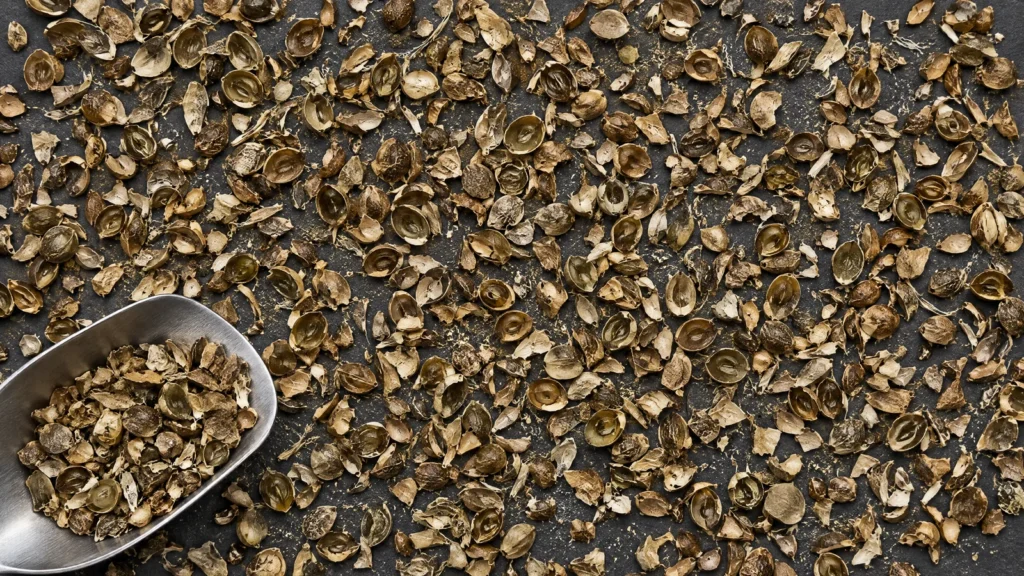
The shells are the fibre side, around 65 percent NDF and low in fat, which suits a ration that needs rumen fill more than it needs energy. The two fractions behave nothing alike, and the rest of this article treats them separately because of it.
Which hemp fractions fit a dairy ration?
| Fraction | What it brings | Evidence |
|---|---|---|
| Hemp seed cake | Protein and residual fat. AURI lists 33 percent crude protein and a TDN of 81, and the fraction keeps some hull fibre | No direct dairy trial. The nearest evidence is dehulled hemp meal |
| Dehulled hemp meal | The kernel only, 296 g/kg crude protein with high rumen undegradable protein | Tested in dairy cows at 15 percent of dry matter |
| Hempseed shells | Fibre, about 65 percent NDF, about 14 percent crude protein and a TDN of 52 | Tested in lambs and ewes, not in dairy cows |
| Smoothie hemp | Dehulling fines, 30.3 percent protein and 38.4 percent fat on one accredited analysis | No dairy trial |
| Hemp seed oil | Concentrated fat, food grade, supplied in 1000 L IBC | No feed trial. It is a food ingredient |
The split matters. Cake and fines are bought for protein and energy, shells are bought for fibre and rumen fill, and they compete for different space in the same mix.
All of the seed we take in is processed into finished fractions and raw seed is not resold, so the cake and the shells are outputs of one closed process rather than a bought-in trading stream.
What did the 12-cow trial find?
The reference is a 2023 study in the Journal of Dairy Science with 12 lactating, non-pregnant Holstein cows in a 3 x 3 Latin square, three periods of three weeks, two weeks of adaptation and one of sampling. The treatments were 15 percent of dry matter as canola meal, 15 percent as dehulled hemp meal, and a 7.5 plus 7.5 percent blend.
| Measure | Result |
|---|---|
| Milk yield | 36.1 kg per cow per day on canola, 35.6 on hemp, not significant |
| Milk fat, protein, lactose | No difference |
| Milk fatty acid profile | Shifted toward more polyunsaturates |
| Dry matter intake | No difference |
| NDF digestibility | No difference |
| Dry matter digestibility | Down from 68.5 percent to 66.1 percent |
| Crude protein digestibility | Up from 64.6 percent to 67.4 percent |
| Milk urea nitrogen | Up from 14.3 to 15.6 mg/dL |
| Authors’ conclusion | Hemp seed meal is a good alternative to canola meal |
The urea figure is the one that needs explaining. The hemp diets were formulated to match the canola diets for energy and protein, and much of the hemp protein resists rumen degradation. That sends more protein past the rumen than the cow needs for milk, and the surplus is deaminated to urea. It explains a rise in milk urea with no rise in milk yield, and it is the same property that makes the material interesting as a bypass protein.
Twelve cows in a Latin square is a solid design for a feeding comparison, and it is still 12 cows. Read the result as evidence that the material does not disturb a dairy ration, not as a guaranteed outcome in your herd.
What the wider literature adds
A 2025 review of industrial hemp by-products in ruminants pooled the feeding studies and found no effect on dry matter intake in dairy cows, while intake tended to rise in beef cattle and tended to fall in small ruminants. The species separation matters, because generalising about hemp across ruminants hides opposite responses.
The same body of work puts hemp seed meal at about 296 grams of crude protein per kilogram with a high rumen undegradable fraction and a high intestinally digestible protein value. That is the profile of a bypass protein, and it is the strongest compositional argument for hemp in a dairy ration, stronger than the fatty acid story.
What the literature does not provide is a dairy trial on shells, or a dairy trial on dehulling fines. Both gaps are real.
Where is the fat ceiling?
Dairy nutrition guidance caps total fat at around 7.5 percent of ration dry matter, because fat above that level interferes with fibre digestion in the rumen and can pull milk fat down. Within that ceiling a fat-rich ingredient has room, and the arithmetic is simple.
Our smoothie hemp carries 38.4 percent fat per kilogram of product as fed. If a ration sits at 4 percent total fat and the ceiling is 7.5 percent, the headroom is 3.5 percentage points, which is about 9 kilograms of smoothie hemp per 100 kilograms of dry matter before the ceiling is reached. That headroom is shared with every other fat source in the mix, and it is a ceiling rather than a recommendation: protein, fibre and palatability usually bind before the fat does, and the nutritionist sets the level.
In total mixed rations the practical constraint is usually palatability and mix stability rather than the fat figure alone, which is why a small inclusion tested on your own herd beats a calculated maximum.
Shells run the other way. They carry little fat and a lot of fibre, so they are added for rumen function, and the limit there is how much fibre the ration can carry before energy density falls.
Shells as the fibre side
Hempseed shells carry about 65 percent NDF and about 14 percent crude protein in published composition data, with a TDN of 52. They are a fibre source in the same bracket as the by-product fibres a compounder already buys, and the comparison with soybean hulls, beet pulp and wheat bran is set out in a separate article.
The ruminant evidence we hold is a 2026 study in lambs and ewes, where shells and screenings raised dry matter intake against wheat screenings without depressing weight gain. A fair basis for shell use in ruminant rations, and not a dairy trial: sheep are not cows and a lactating ration has a different energy density target.
What should be on the specification?
Every incoming load of seed is quality-controlled at our Mustvee warehouse before it reaches the Vahi processing plant, which is why a specification here can be tied to the material in the silo rather than to a season.
| Item | What to ask for |
|---|---|
| Protein | Crude protein, dry matter basis, from regular testing of raw material and finished product |
| Fat | The figure the press leaves, which sets the ceiling |
| Fibre | NDF and ADF, from regular testing |
| Ash and moisture | From regular testing |
| Oxidation | Peroxide and acid value for anything carrying oil |
| Particle size | The grind your mixer handles |
| Organic status | EU Organic EE-ÖKO-03 certificate matching the lot |
Our plant holds EU Organic certification EE-ÖKO-03 and BRCGS certification (Brand Reputation through Compliance Global Standards), and supplies both organic and conventional material. Read the certificate against this table with our guide to reading a hemp feed analysis.
We contract 5,000 hectares of hemp and have intake capacity for around 12,000 hectares of seed, so a dairy customer is buying into a known growing base rather than spot material.
The plant runs 3,000 tonnes of raw seed a year, including 1,000 tonnes of dehulled seed, which is the same stream that produces the dehulled meal in the trial above.
The crop is grown without herbicides, fungicides or insecticides, which matters to any residue panel your quality team runs on incoming material.
Frequently asked questions
Can cows eat hemp?
Yes. Cows can be fed hemp seed meal and hemp fibre. The clearest evidence is a 2023 trial in which dehulled hemp meal replaced canola meal at 15 percent of dietary dry matter in 12 lactating Holstein cows, with no change in milk yield, milk fat, milk protein or lactose.
Can dairy cows be fed hemp cake?
There is no dairy trial on whole-seed hemp cake. The trial that is quoted for dairy used dehulled hemp meal, which is a kernel fraction, so the safest reading is that the kernel material has been tested and the cake is a closely related but different material.
Does hemp meal reduce dry matter intake in dairy cows?
In that trial it did not. A 2025 review of hemp by-products across ruminant studies also found no effect on dry matter intake in dairy cows, while intake tended to rise in beef cattle and tended to fall in small ruminants.
How much hemp hull can go into a dairy ration?
There is no dairy trial we can point to. The published ruminant work on hulls and screenings was done in lambs and ewes, so the level in a dairy ration is set by the nutritionist against the rest of the mix rather than by a published number.
Why is fat the limiting factor with smoothie hemp?
Because smoothie hemp carries 38.4 percent fat. Dairy nutrition guidance caps total ration fat around 7.5 percent of dry matter, and fat above that level interferes with fibre digestion and can pull milk fat down. The remaining headroom is shared with every other fat source in the mix.
Is hemp a good bypass protein for dairy cows?
Published work puts hemp seed meal at about 296 grams of crude protein per kilogram with a high rumen undegradable protein fraction and a high intestinally digestible protein value. That is the profile of a bypass protein, and it is a compositional argument rather than a feeding result at your inclusion level.
Does hemp change milk composition?
In the 2023 trial the milk fatty acid profile shifted toward more polyunsaturates, with no change in fat, protein or lactose content. Milk urea nitrogen rose from 14.3 to 15.6 mg/dL, which points to surplus rumen undegradable protein rather than to any problem with the ration.
What should I ask for with each lot?
Protein, fat, fibre as NDF and ADF, ash, moisture, peroxide and acid value for anything carrying oil, particle size, and the organic certificate that matches the lot. Ask which of those come from regular testing of raw material and finished product.
Related reading
Ask about hemp fractions for dairy
Tell us the ration, the herd and the parameters you need, and we will send the specification and the analysis behind the lot on hand.
Contact Nordic Hemp See the hemp cake product pageSources
Sources used for the figures in this article.
- Comparing dehulled hemp meal and canola meal as a protein supplement for lactating dairy cows. Journal of Dairy Science (2023). JDS
- Use of industrial hemp byproducts in ruminants: a review of the nutritional profile, animal response, constraints, and global regulatory environment (2025). PMC12076842
- New Mexico State University Cooperative Extension Service. Managing milk composition: feed additives and production enhancers. Guidance of 7.5 percent total fat in ration dry matter.
- Agricultural Utilization Research Institute. Opportunity for hemp in feed and pet food. Hemp cake 33 percent crude protein and TDN 81, hemp hulls 14 percent crude protein and TDN 52.
- Evaluation of hemp hulls and screenings as alternative feed ingredients for ruminants. Canadian Journal of Animal Science (2026).