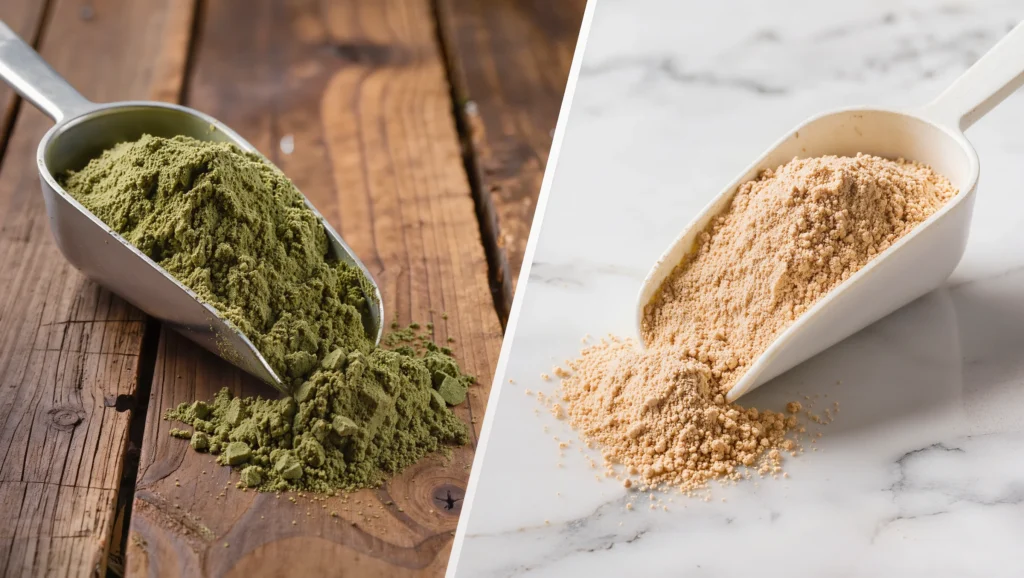
Hemp Seed Oil vs Rapeseed Oil (Canola Oil): Quality, Nutrition and Best Uses
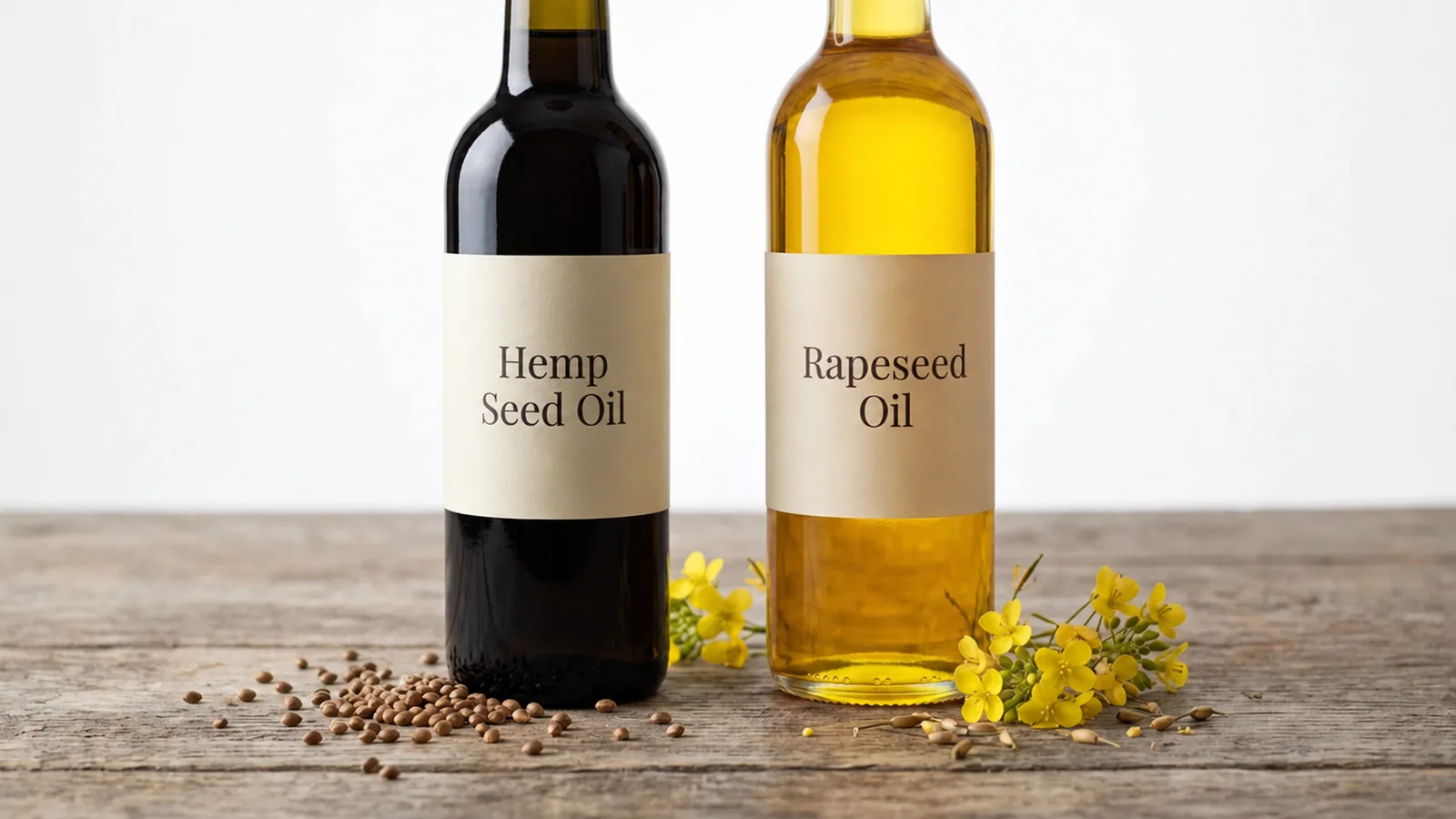
Last updated: October 23, 2026
Should your next product use hemp seed oil or rapeseed oil? Both have their place, but picking the wrong one costs you, in flavour, nutrition, or production efficiency. This guide breaks down their fatty acid profiles, smoke points, processing methods, and best applications so you can decide with confidence. If you buy the same oil under the name canola oil, this guide covers that too, because canola and rapeseed are the same crop.
Choose hemp seed oil when omega-3 content matters. It delivers roughly 20 g of ALA per 100 ml with a ratio of about 3:1 between omega-6 and omega-3. Use it raw, in dressings, dips and cold sauces. Choose rapeseed oil when you need a neutral oil that handles heat. It has the lowest saturated fat of any cooking oil and a smoke point up to 230 °C when refined. In North America this same oil is sold as canola oil. Use it for frying, baking, and any application where the oil plays a supporting role.

Hemp Seed Oil: Always Cold-Pressed
Hemp seed oil is made by cold-pressing the seeds of EU-certified hemp varieties. No heat, no chemicals, just mechanical pressing. What comes out is a deep green oil with a nutty, earthy flavour. It contains no CBD or THC in meaningful amounts, well below the EU limit of 3 mg/kg. Nordic Hemp grows its hemp on over 5,000 hectares of Estonian farmland, cold-presses the oil on site, and holds EU Organic certification under EE-ÖKO-03 and BRCGS Food Safety certification.
Rapeseed Oil or Canola Oil: What Is the Difference?
Rapeseed oil comes from the seeds of Brassica napus, a plant in the mustard family with bright yellow flowers. In North America the same oil is sold as canola oil, and the two names do not describe two different products. Canola is a low-erucic-acid variety of rapeseed, bred so that the oil contains less than 2 percent erucic acid. All canola oil is rapeseed oil, but not every rapeseed oil meets the canola standard. European labels say rapeseed, North American labels say canola, and a food manufacturer buying either one is buying the same crop.
Rapeseed oil is sold in two forms: refined, which is the standard cooking oil and is often simply labelled vegetable oil, and cold-pressed, sometimes labelled extra virgin or culinary. Modern rapeseed and canola varieties are bred to be low in erucic acid, which makes them safe for human consumption. According to the British Heart Foundation, rapeseed oil has the lowest saturated fat content of any cooking oil and is high in heart-healthy monounsaturated fats.
Hemp Seed Oil vs Rapeseed Oil: Nutrition Comparison
| Nutrient (per 100 ml) | Hemp Seed Oil | Rapeseed Oil |
|---|---|---|
| Total fat | ~100 g | ~100 g |
| Calories | ~884 kcal | ~884 kcal |
| Saturated fat | ~9 g | ~6.6 g |
| Monounsaturated (omega-9) | ~12 g | ~60 g |
| Polyunsaturated (omega-6 + omega-3) | ~79 g | ~29 g |
| Omega-3 (ALA) | ~20 g | ~9.6 g |
| Omega-6 (LA) | ~57 g | ~19.7 g |
| Omega-6 to omega-3 ratio | 3:1 | ~2:1 |
| Vitamin E | ~50 mg | ~22 mg |
| Smoke point | ~165 °C (330 °F) | ~204 °C (400 °F) refined |
A quick look at the numbers tells a clear story. With nearly 80 percent of its fat in polyunsaturated form, hemp seed oil carries omega-6 and omega-3 in a ratio of about 3:1. It delivers more than double the omega-3 of rapeseed oil and nearly twice the vitamin E. Rapeseed oil is dominated by monounsaturated fat (oleic acid), which makes it more stable at high temperatures, and it has the lowest saturated fat content of any cooking oil.
Nutritional verdict. Choose hemp seed oil when omega-3 intake is the goal, for cold dishes, dressings, and functional foods where nutrition drives the purchase decision. Choose rapeseed oil when you need a versatile cooking fat with low saturated fat and high heat tolerance, for frying, baking, and everyday kitchen use where the oil plays a supporting, not starring, nutritional role.
Which Oil Has More Omega-3?
Hemp seed oil wins by a wide margin. It contains roughly 20 g of alpha-linolenic acid (ALA) per 100 ml, more than double the 9.6 g found in rapeseed oil. Both oils also carry a good ratio of omega-6 to omega-3, at 3:1 for hemp and about 2:1 for rapeseed, but the sheer quantity of omega-3 in hemp seed oil is unmatched by any common cooking oil except flaxseed oil.
For food manufacturers, this matters. A product made with hemp seed oil can carry a genuine omega-3 nutritional claim. Salad dressings, plant-based sauces, dips, and functional foods all benefit from its fatty acid profile.
Which Oil Is Better for Cooking?
Rapeseed oil, no contest. Its smoke point is around 204 °C when refined, and some varieties handle up to 230 °C. That makes it suitable for frying, sautéing, roasting, and baking. Its neutral flavour will not alter the taste of your food.
Hemp seed oil tops out at around 165 °C. Heat it beyond that and you lose the delicate omega-3 fatty acids and develop a bitter taste. It belongs in cold dishes: dressings, dips, smoothies, drizzled over roasted vegetables after cooking, or mixed into hummus and pesto.
Cold-Pressed vs Refined: Processing Quality
This is where the two oils diverge most sharply. Cold-pressed, start to finish: that is how hemp seed oil is made. Mechanically pressed at low temperatures, the seeds retain their full range of fatty acids, vitamins, and antioxidants. No refining, no chemical solvents, no high-temperature deodorisation.
Rapeseed oil is usually refined. Producers crush the seeds, heat them to high temperatures, and treat them with chemical solvents like hexane to extract the maximum yield. From there, the crude oil is degummed, bleached, and deodorised, processes that strip away flavour, colour, and some nutrients. What you get is a shelf-stable, neutral-tasting oil that is cheap to produce but nutritionally inferior to its cold-pressed form.
Cold-pressed rapeseed oil does exist, and it is a better product. But it makes up a tiny fraction of the market. Most rapeseed and canola oil on the shelf, including anything labelled simply vegetable oil, is highly refined.
No refining, ever. Every bottle of hemp seed oil from Nordic Hemp is cold-pressed from start to finish.
Can You Substitute Hemp Seed Oil for Rapeseed Oil?
Not in cooking. If a recipe calls for rapeseed or canola oil for frying or baking, hemp seed oil will burn and taste unpleasant. But in dressings, dips, and cold sauces you can swap them freely, and hemp seed oil adds more flavour and a much better omega-3 profile.
One tip: start with a 1:3 ratio (one part hemp seed oil to three parts rapeseed or olive oil) to ease into the nutty taste. Adjust from there.
Which Oil Is Better for Food Manufacturing?
Each oil has a clear role in commercial food production. The choice depends on what you are making and how you position it.
| Application | Hemp Seed Oil | Rapeseed Oil |
|---|---|---|
| Salad dressings and vinaigrettes | Excellent, adds omega-3 positioning and nutty flavour | Good, neutral base, lower nutritional claim |
| Mayonnaise and emulsified sauces | Works well cold, premium nutritional profile | Standard choice, stable emulsion, neutral taste |
| Plant-based dips (hummus, pesto) | Excellent, flavour and nutrition add value | Functional but no marketing advantage |
| Bakery products | Not recommended, heat degrades the oil | Excellent, heat-stable, neutral flavour |
| Fried snacks and crisps | Not suitable, smoke point too low | Excellent, high smoke point, industrial fryers |
| Margarine and spreads | Possible in cold blends, limited heat exposure | Traditional base fat for spreads |
| Functional foods and supplements | Excellent, genuine omega-3 claim possible | Minimal, fatty acid profile too common |
| Smoothies and beverages | Excellent, blends well, boosts omega-3 | Not used, flavour and positioning wrong |
For products where nutritional positioning drives purchasing decisions, think cold sauces, dressings, functional foods, and plant-based products, hemp seed oil offers a genuine omega-3 advantage that no refined oil can match. The 3:1 ratio of omega-6 to omega-3 is a label-ready claim.
For high-volume applications that need a neutral, heat-stable oil, such as baking, frying, and snack production, refined rapeseed and canola oil is the standard across the European food industry. It has one of the lowest saturated fat contents of any cooking oil and performs reliably at scale.
Can Rapeseed Oil Be Used for Deep Frying in Industrial Production?
Yes, and it is the default choice for most industrial frying lines. Refined rapeseed oil has a smoke point of around 204 °C, and high-oleic and refined grades go higher, so it holds up to continuous fryer temperatures of 170 to 190 °C without breaking down quickly. Its neutral taste does not carry into the finished product, and its low saturated fat content keeps the nutrition panel clean. High-oleic rapeseed and canola oils are also among the most oxidatively stable options available at industrial scale, which is why they appear in long-life frying and snack production.
Hemp seed oil cannot be used for deep frying at all. At around 165 °C it is already past its limit before a fryer reaches working temperature, and the omega-3 fatty acids degrade into off-flavours and oxidation products. Anyone specifying an oil for a fryer should not consider it.
The practical split for a production line is therefore straightforward. Use refined rapeseed or canola oil for anything that goes through heat, and use cold-pressed hemp seed oil where the oil stays cold and the label needs a real omega-3 number. Many manufacturers run both: rapeseed as the workhorse, hemp seed oil as the premium nutritional ingredient in dressings, dips, and cold sauces.
Nordic Hemp supplies cold-pressed, EU Organic-certified hemp seed oil under EE-ÖKO-03 in 1000 litre IBC containers to food manufacturers worldwide. The oil is produced in a BRCGS-certified facility and tested for quality and purity. Full documentation, including specification sheets and certificates of analysis, travels with every shipment.
Frequently Asked Questions
Is hemp seed oil healthier than rapeseed oil?
It depends on what you need. Hemp seed oil has more omega-3 (20 g versus 9.6 g per 100 ml) and a ratio of about 3:1 between omega-6 and omega-3. Rapeseed oil has the lowest saturated fat of any cooking oil and is better for high-heat cooking. Both can be part of a healthy diet.
Does rapeseed oil cause inflammation?
No. Modern evidence shows rapeseed oil does not cause inflammation. Older concerns were based on early research into omega-6 fatty acids, but more recent studies confirm that omega-6 fats do not increase inflammation when eaten as part of a balanced diet. The British Heart Foundation rates rapeseed oil as a heart-healthy choice.
Can you use hemp seed oil for baking?
Not recommended. The low smoke point, around 165 °C, means the oil degrades under sustained heat, losing its nutritional value and developing a bitter taste. For baking, use rapeseed or another high-smoke-point oil.
Which oil has a better ratio of omega-6 to omega-3?
Both are excellent. Hemp seed oil has a ratio of about 3:1 between omega-6 and omega-3, which is widely considered optimal for human health. Rapeseed oil is around 2:1, also well within the recommended range. Most other vegetable oils run at 10:1 or higher, heavily skewed toward omega-6.
Is canola oil the same as rapeseed oil?
Yes. Canola is a low-erucic-acid variety of rapeseed, and the two names describe the same crop sold under different regional labels. North America says canola, Europe says rapeseed. The nutritional profile is essentially the same, and both are dominated by monounsaturated fat.
Looking for hemp seed oil as an ingredient?
Nordic Hemp supplies cold-pressed, EU Organic-certified hemp seed oil in 1000 litre IBC containers to food manufacturers worldwide.
View product detailsSources
- Nordic Hemp: Cold-Pressed Hemp Seed Oil product specification (fatty acid profile, vitamin E, smoke point, packaging)
- NIH Office of Dietary Supplements: Omega-3 Fatty Acids Fact Sheet (ALA, reference intakes)
- British Heart Foundation: Is Rapeseed Oil Healthy? (saturated fat content, monounsaturated fats)
- Wikipedia: Canola oil (canola as a low-erucic-acid variety of rapeseed, regional naming)
- Hempseed as a Nutritional Resource (fatty acid profile comparison)