How to Read a Hemp Feed Analysis
Last updated: November 11, 2026
A hemp feed analysis arrives as a page of numbers, and most buyers read the first line and stop. That is usually crude protein, and it is usually not the number that decides whether the material fits.
This guide explains what each line means, where the definitions trip people up, and how to compare two hemp fractions without being misled by a decimal point.
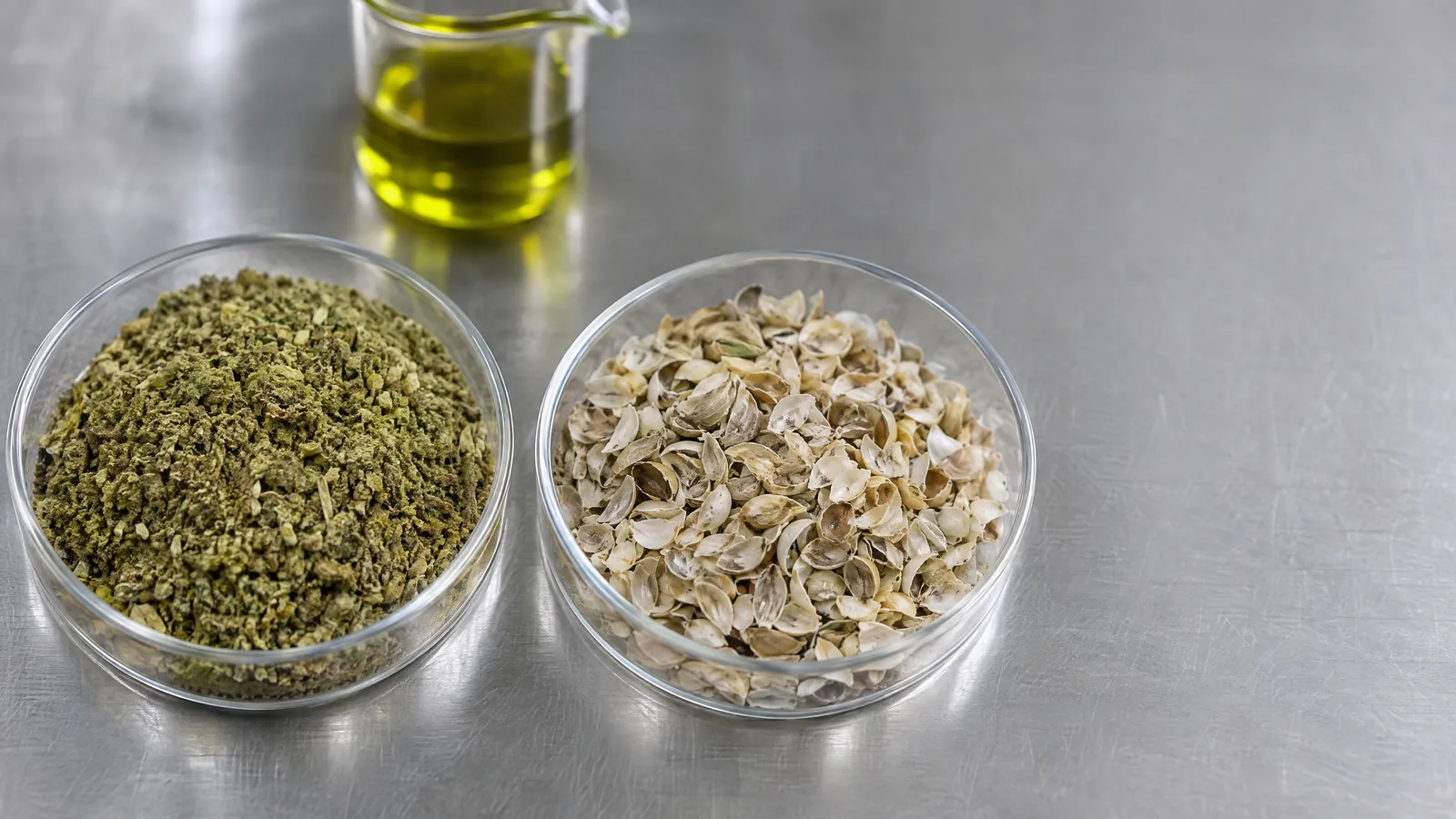
The two fractions where that matters most in our own range are smoothie hemp, where protein and fat move together and the fat figure decides how much a ration can take, and hempseed shells, where NDF is the number that decides what the material is worth.
A hemp feed analysis carries crude protein, crude fat, fibre, ash, moisture and usually a fatty acid breakdown. Protein is nitrogen multiplied by 6.25, so it is an estimate. NDF and crude fibre measure different things and cannot be compared directly. Each lot moves, so the report for the lot you receive is the only one worth formulating to.

Why does a lab report differ from a feed table?
A feed table in a textbook gives one number per nutrient. A laboratory report gives a number, an uncertainty and a method. Both are honest, but only one of them describes your material.
Hemp makes that difference visible. The fat left in a pressed meal depends on how hard the press ran, and the balance of kernel and coat in a fines fraction depends on the run. Two loads of the same product name can differ by several points of protein and more than that in fat.
The six numbers that decide a purchase
| Line | What it measures | What it means for you |
|---|---|---|
| Crude protein | Nitrogen times 6.25 | An estimate of protein, not a measure of it |
| Crude fat | Ether extract | Energy, and the ceiling on inclusion in ruminants |
| Crude fibre | Residue after acid and alkali | A narrow fibre measure, still printed in most tables |
| NDF | Neutral detergent fibre | The cell wall fraction, the usual measure for fibre ingredients |
| Ash | Mineral residue | Where the minerals are, without telling you which |
| Moisture | Drying loss | Storage and flow behaviour |
Two things are missing from that list on purpose: energy and amino acids. Neither comes from a routine panel. The energy figure on a certificate is a label calculation from protein, fat, carbohydrate and fibre using fixed factors, not a measured gross energy and not a metabolisable energy. Amino acid profiles need a separate analysis.
NDF and crude fibre are not the same number
NDF dissolves the cell contents and leaves the wall: cellulose, hemicellulose and lignin together. Crude fibre is a harsher extraction and leaves less. For a fibre ingredient, NDF is the number a nutritionist wants, because it tracks what fills rumen volume.
ADF sits between the two. It strips hemicellulose as well, so it tracks digestibility rather than intake. A full fibre picture for a ruminant ration is NDF for how much the animal will eat and ADF for how much of it it can use.
This is the most common comparison error in feed buying. A hempseed shell lot at about 65 percent NDF and a feed table entry of 30 percent crude fibre are not describing the same material at different quality. They are different measurements.
How do you read the report we send?
- Check the sample date. A report from a different season describes a different crop.
- Read the uncertainty, not just the result. A protein figure with a wide band is not a precise number and should not be treated as one.
- Look for what is not there. If your market needs a microbiological panel or a mycotoxin screen, the routine panel will not contain it.
- Ask which method was used when a figure is going to sit in your own formulation software.
How do the hemp fractions compare on paper?
| Fraction | Crude protein | Fat | Other |
|---|---|---|---|
| Hemp seed cake | About 33% | Not published per lot | 81% TDN, published reference |
| Smoothie hemp | 30.3% | 38.4% fat, 30.0 g polyunsaturates | Calculated energy 2,131 kJ/100 g |
| Hempseed shells | About 14% | Low | About 65% NDF, published reference |
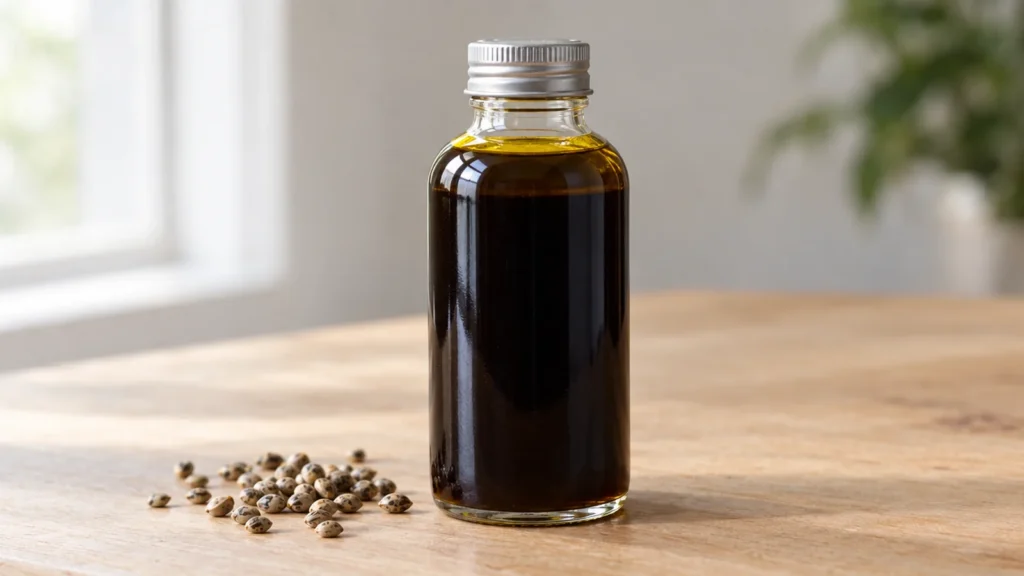
| Hemp seed oil | None | 99.76% fat | A fat, not a feed in itself |
Cake and shell figures come from a published comparison by the Agricultural Utilization Research Institute. The smoothie figures are our own laboratory report on one lot. Oil figures are from our product specification. They are not one laboratory panel and should not be read as if they were.
Frequently asked questions
What does crude protein mean on a hemp feed analysis?
It is nitrogen multiplied by 6.25, so it estimates protein rather than measuring it. Two materials with the same crude protein can feed differently, which is why the amino acid profile matters as much as the headline figure.
Why is NDF reported for some fractions and crude fibre for others?
Because they answer different questions. NDF estimates the cell wall fraction and is the usual measure for a fibre ingredient like shells. Crude fibre is a narrower residue and is what most feed tables still print. They are not interchangeable.
What moisture should hemp feed have?
Low enough to store and flow. We dry hemp seed to an exit moisture of 6 to 9 percent, targeting 8, and the finished fractions carry whatever the process leaves.
Why does the analysis differ between lots?
Because the material is agricultural. Fat left in a pressed meal depends on the press setting, and the mix of kernel and coat in a fines fraction moves between runs. The report for your lot is the one that matters.
Is a higher protein figure always better?
No. Protein costs energy and space in the ration, and a material that brings protein with a lot of fat can push the ration past its fat ceiling. The useful question is what the material delivers per unit of the limiting nutrient.
What does the measurement uncertainty mean?
It is the range within which the true value sits, with about 95 percent confidence. A protein result of 30.3 with an uncertainty of 3 means the real value is plausibly between about 27 and 33, so do not build a formulation on the decimal.
Do you report metabolisable energy?
No. The laboratory gives gross energy. Metabolisable energy needs a digestibility trial, and we do not publish a figure we have not measured.
Ask for the analysis behind a lot
Tell us the species and the parameters you need, and we will send the report for the lot on hand, with the methods behind each figure.
Contact Nordic Hemp See smoothie hemp for feedSources
Sources used for the figures in this article.
- Agricultural Utilization Research Institute. Opportunity for hemp in feed and pet food. One-page composition comparison of hemp cake, hemp hulls and conventional feedstuffs, 2019.
- Nordic Hemp laboratory analysis, GBA certificate 25308690-001, Smoothie 2.0 organic.
- Commission Regulation (EU) 2022/1104 amending Regulation (EU) No 68/2013 on the Catalogue of feed materials. EUR-Lex