Hemp Seed Oil vs Avocado Oil: Which Is Better for Cooking and Skin?
Last updated: October 1, 2026
Both oils sit on the same shelf at the health food shop, and both get described as heart healthy. Then you put them in a pan and they behave like they come from different planets. One browns and burns in seconds. The other shrugs off frying temperatures.
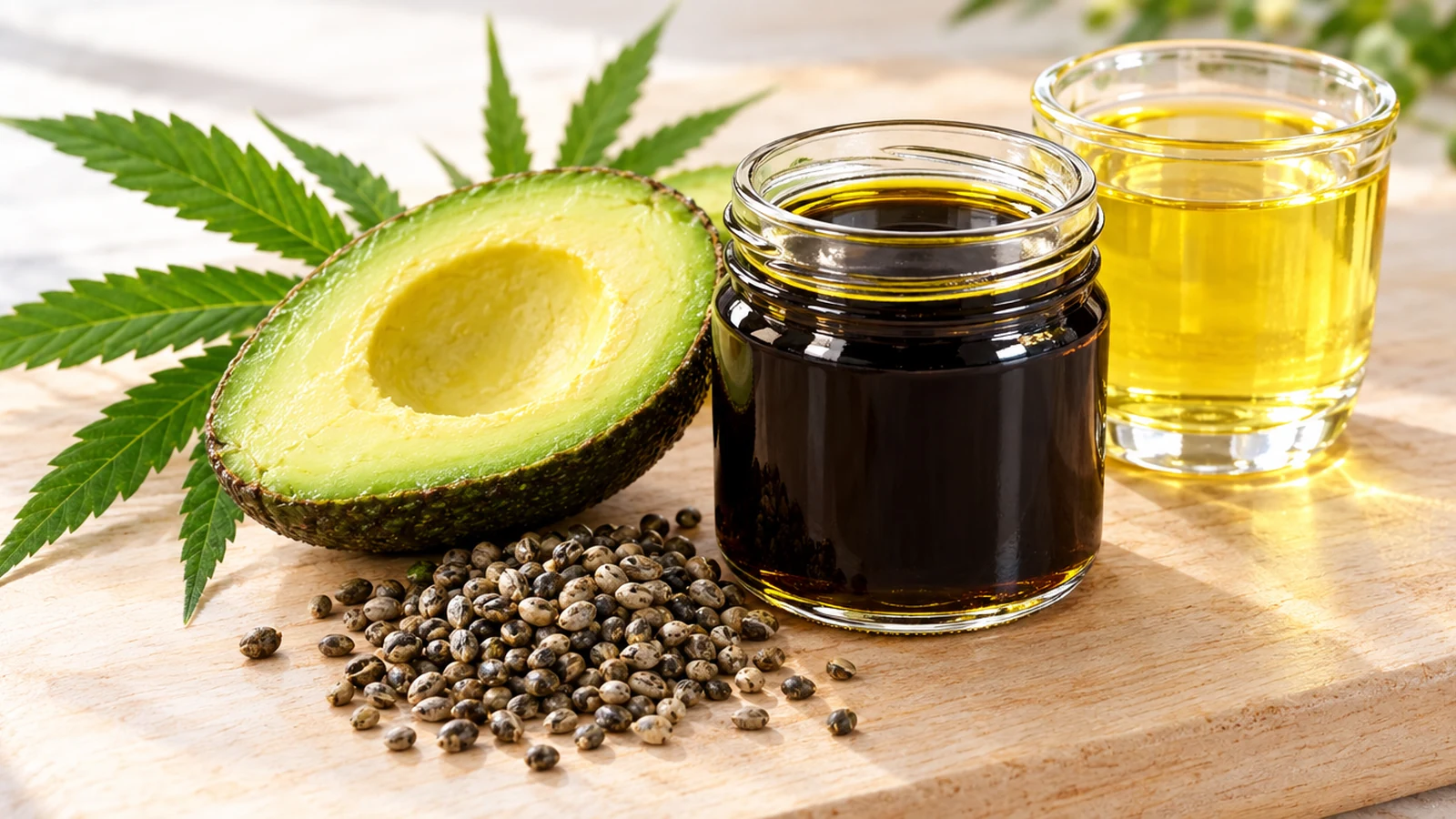
It comes down to the fat itself. Hemp seed oil is pressed from seeds and is nearly all polyunsaturated fat. Avocado oil is pressed from fruit pulp and is mostly monounsaturated fat. This guide compares what that means for cooking, nutrition, skin, and product formulation. If you are new to the seed side of this comparison, start with our hemp seed oil basics first.
Hemp seed oil and avocado oil are opposites. Hemp seed oil brings a 3:1 omega-6 to omega-3 ratio, GLA and a smoke point of around 165 C, so it belongs in dressings and anything cold. Avocado oil is about 76 percent monounsaturated fat, carries more vitamin E, and handles heat up to 250 C or higher, which makes it the frying and roasting oil. Use hemp seed oil for nutrition, avocado oil for heat. Neither one replaces the other.
What is the difference between hemp seed oil and avocado oil?
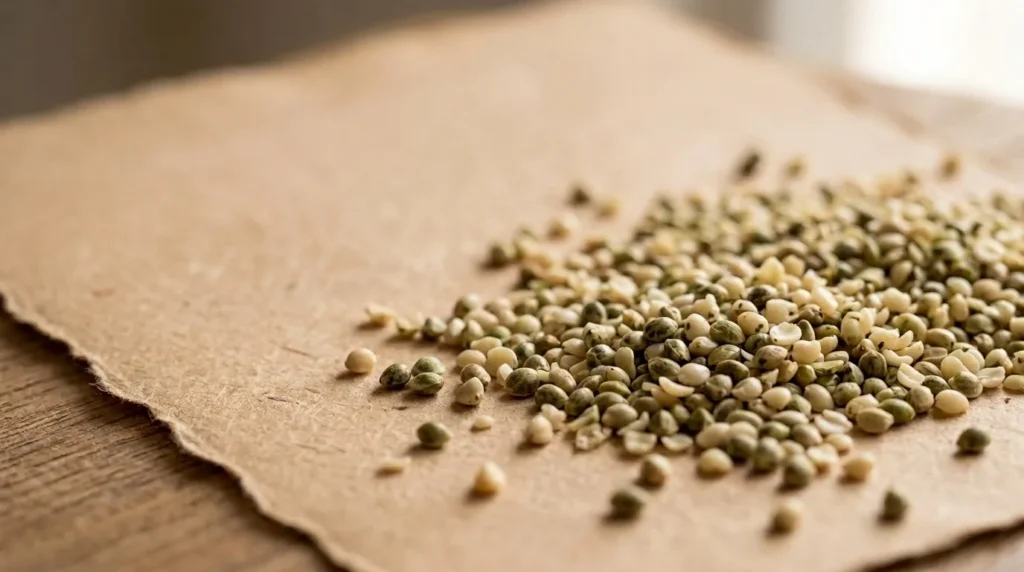
The difference starts at the raw material. Hemp seed oil is pressed from hemp seeds, which are roughly a third fat. Avocado oil is pressed from the flesh of the avocado fruit, which can be up to 30 percent oil by fresh weight. Seeds and fruit pulp give you two completely different fatty acid profiles.
Everything else follows from that. Polyunsaturated fats, which dominate hemp seed oil, are fragile: they oxidise quickly and they degrade under heat. Monounsaturated fats, which dominate avocado oil, are far more stable. One takes a hot pan. The other does not.
Both oils can be made by cold-pressing, and both can be refined. Hemp seed oil is nearly always sold cold-pressed because refining strips out exactly what people buy it for. Avocado oil splits into two clear categories: cold-pressed, unrefined oil for eating, and refined oil that is odourless and pale, which is the version used in a lot of cosmetics and some high-heat cooking products. We compare the two hemp oil routes in detail in our cold-pressed vs refined guide.
Hemp seed oil: cold-pressed and omega-3 first
Nordic Hemp presses cold-pressed hemp seed oil from Estica and RAK hemp grown on over 5,000 hectares of Estonian farmland. Production stays below roughly 40 C, which keeps the delicate fatty acids, the GLA and the vitamin E intact.
The headline is the omega profile. Hemp seed oil sits at roughly 3 parts omega-6 to 1 part omega-3, and it carries alpha-linolenic acid (ALA), an essential omega-3 the body cannot make on its own. It also contains gamma-linolenic acid (GLA), a less common omega-6 found in only a handful of seed oils. Most Western diets run closer to 10:1 omega-6 to omega-3, so an oil with a lower ratio stands out.
The trade-off is heat. Hemp seed oil has a smoke point of around 165 C. Push it beyond that and the omega-3s break down, the flavour turns bitter, and oxidation products start forming. It is a finishing oil, not a frying oil. Unopened, it keeps for 18 months when stored cool, dry and out of sunlight, and it belongs in the fridge once the bottle is open.
Avocado oil: monounsaturated and built for heat
Avocado oil is the other end of the spectrum. A typical avocado oil is about 76 percent monounsaturated fat, mostly oleic acid, with around 12 percent polyunsaturated fat and 12 percent saturated fat. If that sounds familiar, it should: the profile sits close to olive oil.
The monounsaturated backbone makes avocado oil unusually stable. Extra virgin cold-pressed avocado oil has a smoke point of 250 C or higher, and refined avocado oil goes higher still at around 271 C. The AOCS notes that this high smoke point makes extra virgin avocado oil a good frying oil, unlike the delicate seed oils.
It also carries more vitamin E than most oils. AOCS composition data put the main antioxidant, alpha-tocopherol, at roughly 70 to 190 mg per kg of oil, alongside the chlorophylls and carotenoids that give cold-pressed avocado oil its emerald green colour.
Nutrition comparison: hemp seed oil vs avocado oil
Per 100 g of oil, the numbers look like this.
| Per 100 g | Hemp seed oil | Avocado oil |
|---|---|---|
| Energy | 3761 kJ / 899 kcal | ~3700 kJ / 884 kcal |
| Total fat | 99.76 g | ~100 g |
| Monounsaturated fat | ~12 g | ~76 g |
| Polyunsaturated fat | ~79 g | ~12 g |
| Saturated fat | ~9 g | ~12 g |
| Omega-3 (ALA) | ~20 g | Under 1 g |
| Omega-6 to omega-3 ratio | 3:1 | Not comparable |
| Vitamin E | Present | 70 to 190 mg/kg alpha-tocopherol |
| Smoke point | ~165 C (330 F) | 250 C+ cold-pressed, ~271 C refined |
Sources: hemp seed oil values from Nordic Hemp product specifications (lab-verified, 2026). Avocado oil values from AOCS and published avocado oil composition data.
Two columns decide most of it. Hemp seed oil wins the omega-3 column by a wide margin. Avocado oil wins the vitamin E column and the heat column. Total calories are almost identical, because oil is oil.
Which oil has more omega-3?
Hemp seed oil, by a wide margin, and it isn’t close. Roughly a fifth of the fat in hemp seed oil is ALA, while avocado oil contains under 1 percent omega-3. Avocado oil isn’t marketed as an omega-3 oil, and it shouldn’t be.
This matters for anyone who does not eat oily fish. For a plant-based diet, hemp seed oil is one of the few oils that puts a meaningful ALA number on the label. Avocado oil brings oleic acid and vitamin E, which are useful, but they are not the same thing.
A 2026 randomized, double-blind crossover trial published in Food & Function had 30 adults consume hemp products for four weeks. Blood analysis showed ALA, GLA, DGLA and EPA all rose in plasma and red blood cells, with no adverse changes in blood lipids, blood pressure or body composition. That is the first controlled human evidence that hemp-derived fatty acids actually reach the bloodstream in measurable amounts.
Can you cook with hemp seed oil or avocado oil?
Avocado oil, yes. Hemp seed oil, only gently.
Hemp seed oil tops out at around 165 C, which is well below frying temperature. It works in dressings, vinaigrettes, dips, hummus, pesto, and drizzled over finished vegetables or soup. Any step that keeps it in a hot pan is a mistake.
Avocado oil works where hemp seed oil cannot. Its smoke point of 250 C or higher makes it suitable for frying, searing, roasting and baking. Cold-pressed avocado oil also tastes good enough to use raw, so it covers both ends of the kitchen. Refined avocado oil is the neutral, pale version that behaves more like a commodity cooking oil.
If the pan is hot, use avocado oil. If the dish is finished, use hemp seed oil. Keeping both on the shelf beats ruining a bottle of either one.
Which is better for skin and hair?
Both oils show up in skincare, but for different reasons.
Hemp seed oil is generally considered non-comedogenic, which means it doesn’t clog pores, and it is light enough to absorb without leaving a heavy film. Its GLA content is what cosmetic formulators focus on, since it supports the skin’s lipid barrier. That makes it a common choice for facial oils, especially for oily and acne-prone skin.
Avocado oil is richer and heavier. It has been used in cosmetics for a long time, largely because it penetrates the skin quickly and carries a high vitamin E content. It suits dry skin, body care and hair treatments, where that extra richness is an advantage. Most avocado oil sold for cosmetics is refined, not cold-pressed.
On the skin side, a 2026 in-vitro study in the Journal of Oleo Science looked at cultured human skin cells and reported faster wound closure in the lab, along with a 72 percent increase in fibroblast proliferation at a concentration of 0.12 mg/mL. That is cell work rather than a human trial, so treat it as a hint rather than proof.
Which oil should go on your salad?
Here the two actually overlap. Cold-pressed avocado oil and hemp seed oil both work on a salad, and both taste good enough to use unheated. The difference is what you are buying with the drizzle.
If the point of the salad is nutrition, hemp seed oil brings the omega-3. If the point is flavour and richness, cold-pressed avocado oil brings a mild, buttery, slightly green taste. A vinaigrette made with hemp seed oil tastes nuttier and grassier, which some people love and others do not. Avocado oil is the more neutral of the two.
Which oil should food manufacturers choose?
It depends on the process, not on which oil is trendier.
Hemp seed oil fits products where nutrition is the selling point and heat is not part of the line: dressings and vinaigrettes, dips and sauces, plant-based spreads, nutrition bars and functional foods. It puts a real ALA number behind a label claim and needs no pre-treatment in a formulation. It is also the harder oil to source well, because cold-pressing quality varies enormously between suppliers.
Avocado oil fits heat-processed lines: fried and roasted snacks, products that need a neutral high-heat carrier, and cosmetics where refined oil is acceptable. Availability is wider and the supply chain is more mature.
Nordic Hemp supplies cold-pressed, EU Organic-certified hemp seed oil under EE-ÖKO-03, with BRCGS food safety certification, in 1000 litre IBC containers to food manufacturers worldwide. Our raw material and finished products are regularly tested, and batch documentation travels with every shipment.
Storage and shelf life: how they compare
Polyunsaturated fats oxidise faster than monounsaturated ones, and that decides how each oil is stored.
Hemp seed oil is the sensitive one. Keep it cool, dry and out of sunlight, in a sealed dark bottle. Unopened, Nordic Hemp specifies a best-before of 18 months from packaging when stored correctly. Once opened, it belongs in the fridge and should be used steadily. If it smells sour or paint-like, it has gone rancid.
Avocado oil is more forgiving. Its monounsaturated profile and high vitamin E content protect it, so it keeps well at room temperature in a sealed bottle, away from direct light. Cold-pressed avocado oil is the quicker of the two to fade in flavour, while refined avocado oil holds its neutral character far longer.
What does each oil taste like?
Hemp seed oil is nutty and slightly grassy, with a fresh green note. The darker the oil, the stronger the flavour, and good cold-pressed hemp seed oil tastes clean rather than bitter.
Cold-pressed avocado oil is mild and buttery, with a green edge that some describe as slightly peppery. Refined avocado oil tastes of almost nothing, which is exactly why manufacturers use it when they want the fat without the flavour.
Making your choice
| If you need | Choose |
|---|---|
| Plant omega-3 and a 3:1 ratio | Hemp seed oil |
| Frying, searing, roasting, baking | Avocado oil |
| Vitamin E and monounsaturated fat | Avocado oil |
| A light facial oil for oily skin | Hemp seed oil |
| A rich oil for dry body skin and hair | Avocado oil |
| A nutrition claim on a cold product | Hemp seed oil |
| A neutral, heat-stable production oil | Avocado oil |
Most kitchens end up with both, and the split is easy to remember. Hemp seed oil is the nutrition oil you never heat. Avocado oil is the workhorse that takes the pan.
Is avocado oil healthier than hemp seed oil?
Neither is healthier overall, they are simply different. Avocado oil brings monounsaturated fat and more vitamin E. Hemp seed oil brings omega-3, a 3:1 omega-6 to omega-3 ratio and GLA. If your diet is short on omega-3, hemp seed oil adds something avocado oil cannot.
Can I use hemp seed oil instead of avocado oil?
Only in cold dishes. Hemp seed oil has a smoke point of around 165 C, so it cannot replace avocado oil for frying, searing or roasting. In dressings, dips and drizzles, you can swap them, though the flavour will change from mild and buttery to nutty and grassy.
Which oil has a higher smoke point?
Avocado oil, and it is not a close call. Cold-pressed avocado oil reaches 250 C or higher, and refined avocado oil goes higher still at around 271 C. Hemp seed oil sits at around 165 C, so it is a finishing oil rather than a cooking oil.
Is avocado oil a source of omega-3?
No, not in any meaningful amount. Avocado oil contains under 1 percent omega-3, while hemp seed oil is roughly 20 percent ALA. If omega-3 is your goal, hemp seed oil is the one to choose.
Can you use avocado oil on your face?
Yes, but it is a richer oil, so it suits dry skin better than oily skin. Hemp seed oil is generally considered non-comedogenic and is lighter, so it turns up more often in facial oils for acne-prone skin. Patch test either one first if your skin is sensitive.
Which oil should I keep in my kitchen?
Both, if you have the space. Keep avocado oil for anything involving heat and hemp seed oil for dressings, dips and finishing. Buy hemp seed oil in a small bottle, store it in the fridge after opening, and use it steadily.
Need cold-pressed hemp seed oil?
Nordic Hemp supplies cold-pressed, EU Organic-certified hemp seed oil in 1000-litre IBC containers to food manufacturers worldwide.
View product details
Sources
- Nordic Hemp: Cold-Pressed Hemp Seed Oil product specification
- AOCS: What is unrefined, extra virgin cold-pressed avocado oil? (fatty acid profile, tocopherols, smoke point)
- Wikipedia: Avocado oil (smoke points for unrefined and refined oil)
- Food & Function (2026): Hemp product consumption and blood fatty acid profiles, randomized double-blind crossover trial
- Journal of Oleo Science (2026): Physicochemical characterization and wound healing potential of cold-pressed hemp seed oil