Hemp Protein vs Whey Protein: Which One Should You Choose?
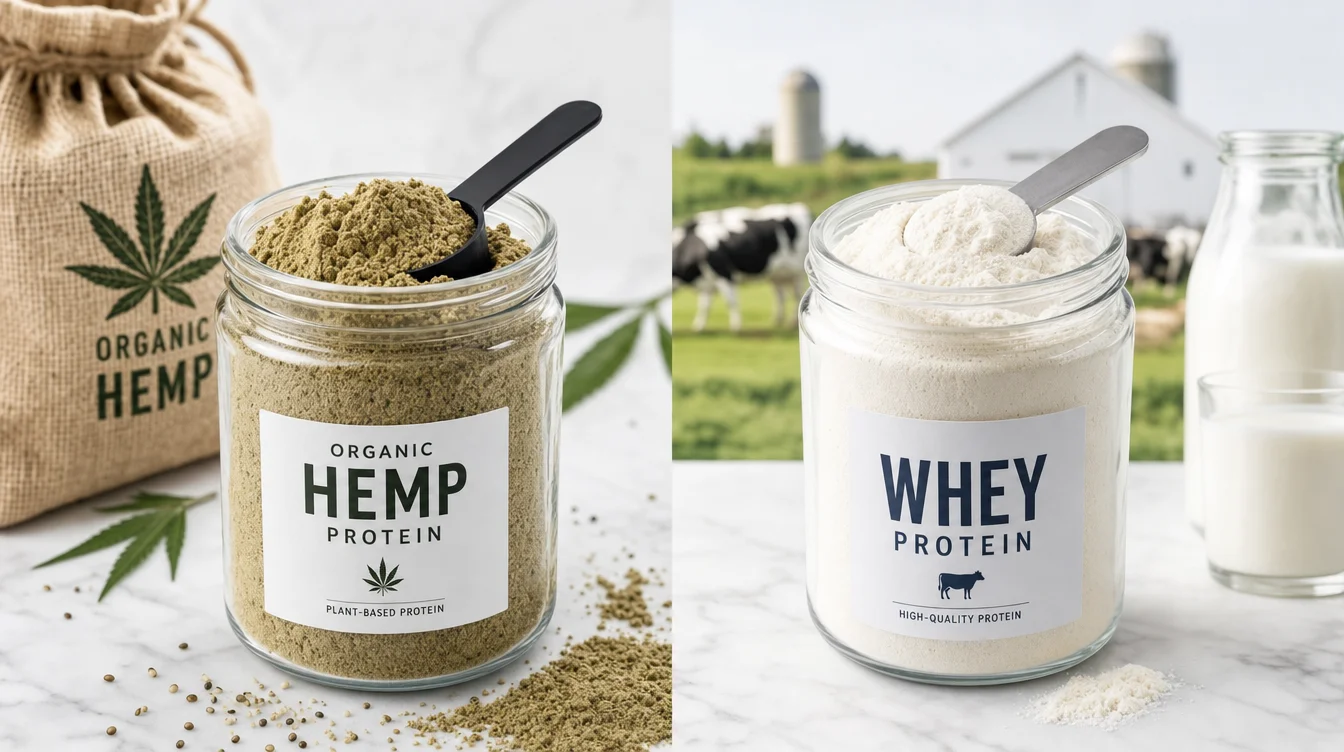

Hemp and whey are the two most talked-about protein powders right now. One is a millennium-old seed ground into a fibre-rich powder. The other is a dairy by-product that bodybuilders have relied on for decades. People compare them all the time, but they are not really competing for the same job.
Whey is built for one thing — fast muscle recovery. Hemp brings more to the table: fibre, omega-3s, minerals, and a gentler digestibility profile. Which one fits your life depends on what you are actually trying to do.
Hemp and whey are both complete proteins, but they serve different needs. Whey delivers more protein and leucine per scoop — better for muscle building post-workout. Hemp gives you fibre, omega-3s, and minerals, digests more slowly, and works for people who cannot tolerate dairy. Neither is “better” — it is about what your body and your goals need.
What’s the difference between hemp and whey protein?
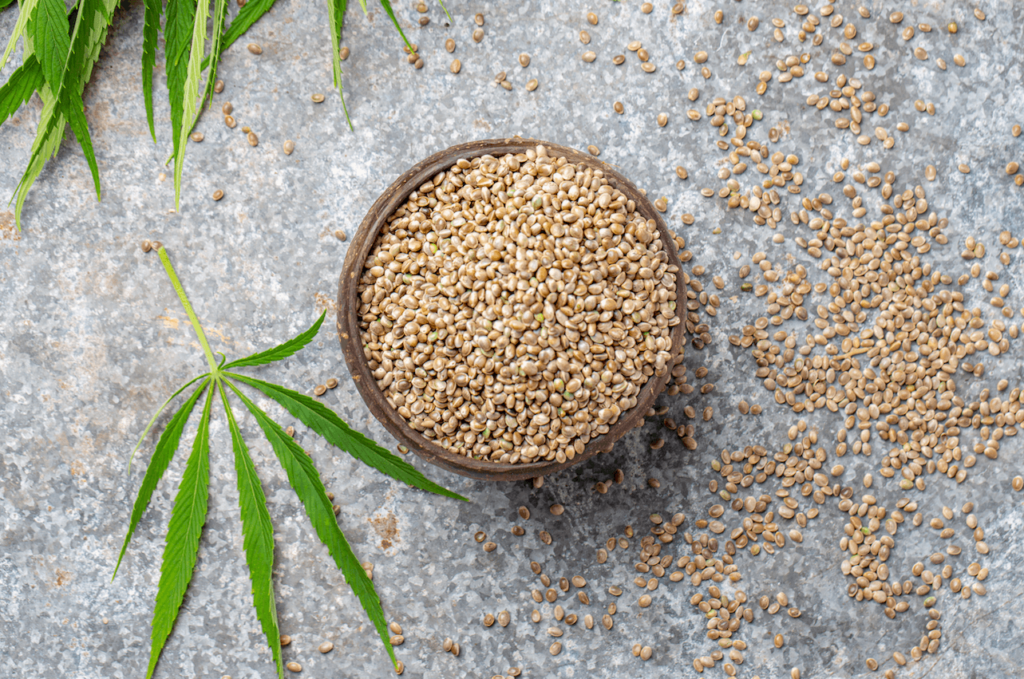
Hemp protein is made from hemp seeds — the seeds are cold-pressed to remove oil, and the remaining press-cake is milled into a fine powder. It is a whole-food ingredient, not a refined isolate. That is why a 30g serving of hemp protein 50% gives you 15g of protein alongside 5.4g of fibre, omega-3s, magnesium, iron, and zinc.
Whey protein starts as milk. During cheese production, the liquid whey is separated from curds, then filtered, dried, and sometimes further processed into concentrate (30–80% protein), isolate (90%+), or hydrolysate (pre-digested for fastest absorption). A standard 30g scoop of whey isolate delivers 25–27g of protein but essentially zero fibre.
Both are complete proteins — they contain all nine essential amino acids. The difference is in the quantities and what else comes along for the ride.
| Factor | Hemp Protein | Whey Protein (Isolate) |
|---|---|---|
| Source | Hemp seeds (plant) | Cow’s milk (dairy) |
| Protein per 30g | 15 g | 25–27 g |
| Fibre per 30g | 5.4 g | 0 g |
| Omega-3s | Yes | No |
| Complete protein? | Yes | Yes |
| Vegan? | Yes | No |
| Common allergens | None | Milk, lactose |
| PDCAAS score | 0.46–0.63 | 1.00 |
How do their amino acid profiles compare?
Both proteins contain all nine essential amino acids. The key difference is concentration, especially in leucine — the amino acid that triggers muscle protein synthesis.
| Amino Acid (g/100g protein) | Hemp Protein | Whey Isolate |
|---|---|---|
| Leucine (BCAA) | 6.2 g | 10–11 g |
| Isoleucine (BCAA) | 3.8 g | 6–7 g |
| Valine (BCAA) | 4.6 g | 5–5.5 g |
| Lysine | 3.0 g | 9–10 g |
| Arginine | 8.6 g | 2 g |
| Methionine | 1.6 g | 2 g |
| Threonine | 2.6 g | 6–7.5 g |
| Phenylalanine | 3.6 g | 3 g |
Whey has a clear advantage in leucine and lysine. A single 25g scoop of whey isolate delivers roughly 2.5–3g of leucine — the threshold researchers associate with maximal muscle protein synthesis. You would need about 40–50g of hemp protein to match that, which also brings more fibre and calories.
Hemp has one unique advantage: arginine. At 8.6g per 100g of protein, hemp has roughly four times the arginine content of whey. Arginine supports blood flow, nitric oxide production, and cardiovascular health — not directly muscle-building, but useful for recovery and overall wellness.
Which one scores higher on protein quality?
The most commonly used metric is PDCAAS (Protein Digestibility-Corrected Amino Acid Score). It runs from 0 to 1 and measures both the amino acid profile and how well your body can digest the protein.
| Metric | Hemp Protein | Whey Protein |
|---|---|---|
| PDCAAS | 0.46–0.63 | 1.00 |
| DIAAS (more modern score) | ~0.50 | ~1.09 |
| Leucine per 30g serving | ~0.9 g | ~2.5–3 g |
| Protein efficiency ratio | Moderate | High |
Whey scores a perfect 1 on PDCAAS. Hemp lands between 0.46 and 0.63 depending on processing and fibre content. That does not mean hemp is a bad protein — it means you need more of it to get the same essential amino acid coverage. Think of it like oats versus eggs: both are nutritious, but one is more concentrated.
How your body digests each protein
Whey is a fast protein. Your body breaks it down and absorbs it within 20–40 minutes. That rapid spike in blood amino acids is exactly what you want after a workout — it triggers muscle repair quickly.
Hemp is a medium-speed protein, absorbing at roughly 4–7g per hour. The fibre content slows things down, which can actually be a benefit: you feel full longer, blood sugar stays stable, and the amino acids release gradually over several hours.
The fibre in hemp also feeds your gut microbiome. Whey has no fibre at all. A 30g scoop of hemp gives you about 5–6g of fibre, which is substantial for a protein powder — comparable to a serving of oats. That extra fibre promotes satiety and helps with weight management if that is your goal.
Two practical things worth knowing. First, the coarser fibre in some hemp powders can cause what users call a “pass-through” effect — undigested fibre visible in stool. This is harmless but can be surprising if you are not used to high-fibre diets. Starting with a smaller serving and increasing gradually helps. Second, the lactose argument is narrower than most people think: whey isolate contains less than 1g of lactose per serving. Most people with mild lactose intolerance tolerate it perfectly fine. It is mainly whey concentrate that causes problems.
For people with digestive sensitivity, whey concentrate can cause bloating because of lactose (about 65% of adults have some degree of lactose malabsorption). Hemp is naturally lactose-free and allergen-free, though its own fibre can cause mild gas at first — same advice: start small and build up.
How do they taste and how to use them?
Whey has a mild, milky flavour that blends into almost anything without being noticed. It mixes smoothly with water or milk — no clumps, no grit. That is why it is the default for post-workout shakes.
Hemp has a distinct nutty, earthy taste. The texture is slightly grittier because of the fibre. It works well in smoothies (especially with banana or berries), oatmeal, yoghurt, and baking. You can swap about a quarter of the flour in any recipe for hemp powder and get a protein boost without changing the texture much.
Hemp Protein
- Nutty, earthy flavour
- Slightly gritty texture
- Best in smoothies, oatmeal, baking
- Needs more liquid — powder absorbs fast
- Good for: daily nutrition, meal replacement
Whey Protein
- Mild, milky flavour
- Smooth, creamy texture
- Best in shakes, water, milk
- Mixes instantly, no clumps
- Good for: post-workout, precise macro tracking
The environmental footprint
Hemp wins this category by a wide margin. Hemp farming produces very little CO2, requires minimal water, and improves soil health through its deep root system. Our de-hulling facility in Estonia runs zero-waste. Hemp is a hardy rotational crop that cleans the soil for the next season.
Whey is a by-product of the dairy industry, which has a considerably higher carbon footprint. Dairy cows produce methane, require large amounts of water and feed, and the processing of whey into isolate uses energy-intensive filtration. If sustainability matters to you, hemp is the cleaner choice.
Which one should you choose?
Here is the short version:
- Choose whey if your main goal is post-workout muscle recovery, you tolerate dairy well, and you want the highest protein-per-scoop ratio.
- Choose hemp if you want a plant-based protein that also delivers fibre, omega-3s, and minerals, you have dairy sensitivity, or you prefer a slower-digesting protein that keeps you full longer. Many people find hemp the healthier choice for their overall lifestyle — not because of protein density, but because of what else it brings.
- Use both — whey right after training for the fast leucine spike, hemp as a daily boost in smoothies or oatmeal for the nutritional extras.
Hemp protein is not a direct competitor to whey. They are different tools for different jobs. The best choice is the one that fits your body, your diet, and your goals.
Common questions about hemp vs whey protein
Can you build muscle with hemp protein?
Yes, but it takes more hemp to reach the leucine threshold that triggers muscle protein synthesis. A 30g serving of hemp gives you about 0.9g of leucine; you would need roughly 80–90g of hemp powder to match the 2.5g leucine in a standard whey shake. For serious bodybuilding, many people combine hemp with a higher-leucine plant protein like pea or use both hemp and whey at different times.
Is hemp protein easier on the stomach than whey?
For most people, yes. Hemp is naturally free of dairy, lactose, and the nine major allergens. Whey concentrate causes bloating and gas for many people because of lactose content. Even whey isolate can cause digestive issues in sensitive individuals because it is absorbed so quickly. The high fibre in hemp can cause mild bloating at first, but most people adjust within a week.
Does hemp protein have the same amino acids as whey?
Both contain all nine essential amino acids — they are complete proteins. The difference is concentration. Whey has roughly double the leucine, three times the lysine, and a better overall EAA profile per gram. Hemp has significantly more arginine (four times more than whey), which is good for blood flow and heart health.
Can I take hemp and whey protein together?
Absolutely. They complement each other well. Whey gives you the fast leucine spike for post-workout recovery. Hemp adds fibre, omega-3s, and minerals that whey lacks. Many people use whey after training and hemp in their morning smoothie or oatmeal for daily nutrition.
Does hemp protein cause acne like whey?
Whey has been linked to acne in some people because it spikes insulin and IGF-1 levels, which can increase sebum production. Hemp does not have this effect. People who break out from whey often find their skin clears up after switching to a plant-based protein like hemp.
Which has more protein per scoop — hemp or whey?
Whey has significantly more protein per scoop. A standard 30g scoop of whey isolate delivers 25–27g of protein. A 30g scoop of hemp protein 50% gives you 15g. You would need roughly two scoops of hemp to match the protein content of one scoop of whey isolate, though you also get extra fibre, omega-3s, and minerals with the hemp.
Who should not take hemp protein?
Hemp protein is safe for virtually everyone. The main groups who should be careful are people with a known hemp seed allergy (rare) and anyone on blood-thinning medication — the omega-3s and vitamin E can have a mild blood-thinning effect. People with pre-existing kidney conditions should also check with their doctor before adding any new protein supplement, though no evidence suggests hemp is harmful to kidneys. If you are pregnant or nursing, consult your healthcare provider as a general precaution.
Which plant protein is the healthiest?
There is no single winner — each plant protein has strengths. Hemp is the only one that delivers protein, fibre, and omega-3s in one powder. Pea has more protein per gram but is not a complete protein (low in methionine). Soy is complete but common allergen and often GMO. Rice is easy to digest but very low in lysine. Hemp is the most nutritionally well-rounded option, especially if you care about gut health and sustainability.
How to get 30g protein without meat?
A 30g scoop of hemp protein gives you 15g. Pair it with other plant sources to reach 30g: two scoops of hemp protein (30g) gives you 30g of protein plus 10g of fibre. Or combine one scoop of hemp (15g) with a tablespoon of hemp seeds (5g) and a glass of soy milk (8g). Hemp protein in oatmeal with nuts and seeds can easily clear 30g in a single meal.
Should anyone avoid protein powder altogether?
Some doctors advise against protein powders for people with kidney disease, because high protein intake can strain the kidneys. Others recommend whole-food sources over powders for general nutrition. For most healthy adults, protein powder is safe and convenient. If you have a medical condition, ask your doctor — but the blanket idea that “doctors say no to protein powder” usually refers to people with existing kidney issues, not the general population.
Are there any side effects of hemp protein?
Side effects are rare and mild. The most common is temporary bloating or gas from the high fibre content if you are not used to it — starting with one serving a day and increasing gradually solves this. Some people notice undigested fibre in their stool (the “pass-through” effect), which is harmless. Hemp protein is free of the nine major allergens, so allergic reactions are extremely rare. Unlike whey, it does not cause acne or digestive distress in lactose-sensitive people.
For food manufacturers
HP50 is used across Europe in protein bars, plant-based meats, cereals, and baked goods. For bulk pricing, certifications, and technical specifications, see our complete guide for food manufacturers.
Conclusion
If you tolerate dairy and want the most efficient post-workout protein, whey is hard to beat. If you want a plant-based powder that supports your whole body — not just your muscles — and comes with fibre, omega-3s, and a clean environmental track record, hemp is the smarter daily choice. There is no single winner. Pick the one that fits your life.
Ready to try hemp protein?
Nordic Hemp produces organic hemp protein 50% in Estonia. EU Organic certified, lab tested, available in 25 kg bags for manufacturers worldwide.
View product detailsSources
- USDA FoodData Central — Seeds, hemp seed, hulled (SR Legacy, FDC ID 170148)
- ACS Food Science & Technology — Physicochemical, Structural, and Functional Properties of Hemp Protein vs Several Commercially Available Plant and Animal Proteins (2022)
- House et al. (2010). PDCAAS of hemp seed protein. J. Agric. Food Chem.
- Healthline — Hemp Protein: The Best Plant-Based Protein?
- Tang et al. (2009). Assessment of PDCAAS and DIAAS for whey and plant proteins. J. Agric. Food Chem.