Hemp Seed Oil vs Coconut Oil: Which One Do You Actually Need?
Last updated: September 23, 2026
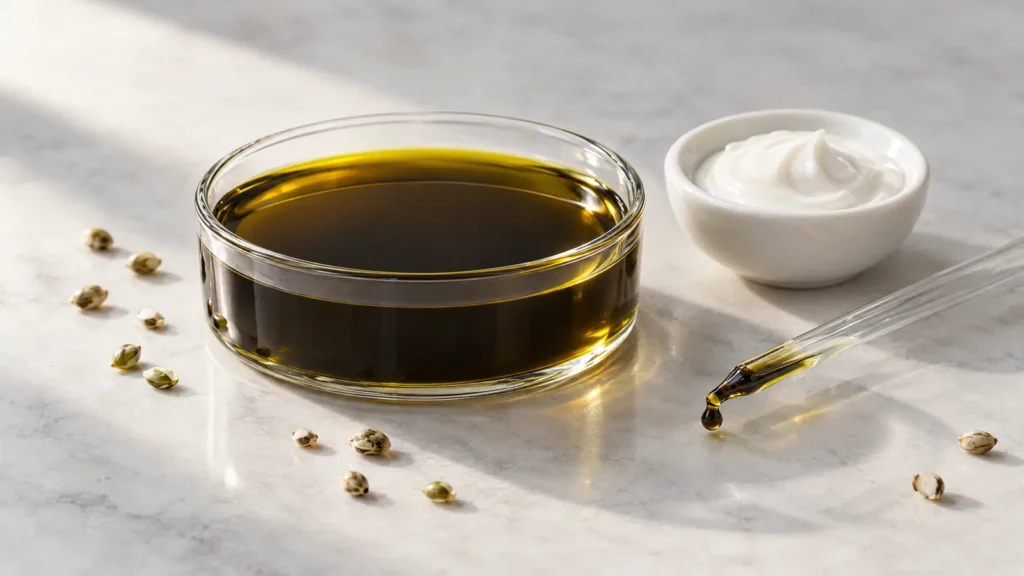
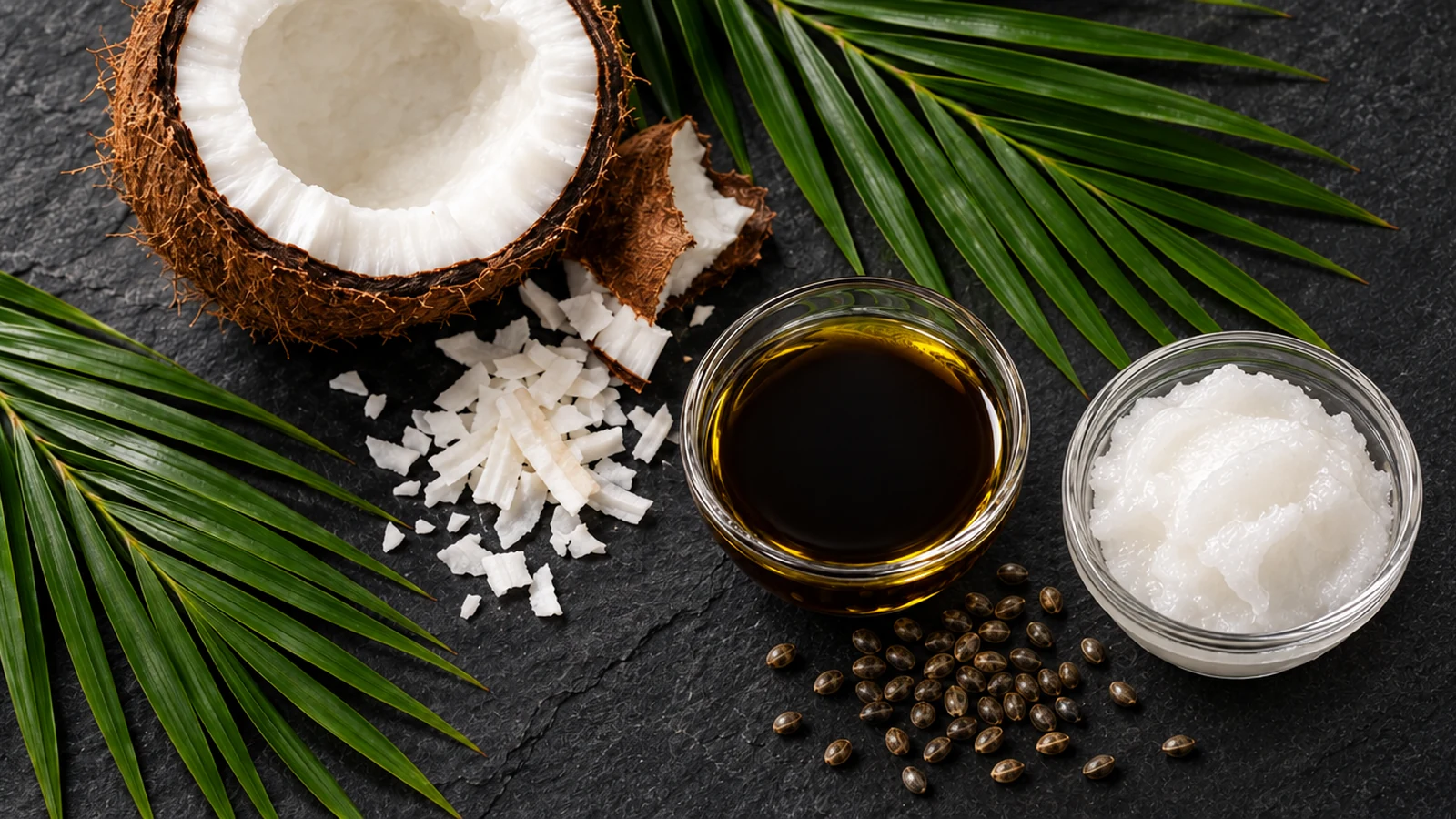
Two oils, two very different personalities. Hemp seed oil stays liquid, dark, and delicate. Coconut oil turns solid below 25 degrees and shrugs off heat. Same kitchen, opposite jobs. The interesting part is that most comparisons stop at the smoke point and call it a day. The last year of clinical research says there’s more to the story, especially on the nutrition side.
Hemp seed oil and coconut oil are not rivals. They are complementary. Hemp seed oil brings a 3:1 omega-6 to omega-3 ratio, GLA, and a smoke point around 165 C, so it belongs in dressings, dips, and anything cold. Coconut oil brings heat stability, a smoke point up to 204 C when refined, and MCTs. For skin, hemp seed oil is non-comedogenic and suits sensitive and oily skin, while coconut oil works better as a body and hair treatment. Use both, just not for the same job.

Two Oils, Opposite Jobs
They are two of the most searched plant oils online, and they sit at opposite ends of the fatty acid spectrum. Coconut oil is mostly saturated fat. Hemp seed oil is mostly polyunsaturated. That single difference drives everything: how they cook, how they feel on skin, how long they last, and what the body can do with them.
One more reason to pay attention. New human trials in 2026 started to show measurable changes in blood fatty acids from eating hemp products, something the coconut-vs-hemp articles from a few years ago had no access to. This article folds that evidence in, instead of recycling old verdict-style takes.
What Is the Difference Between Hemp Seed Oil and Coconut Oil?
| Characteristic | Hemp Seed Oil | Coconut Oil |
|---|---|---|
| State at room temperature | Liquid, dark green | Semi-solid, white |
| Primary fat | Polyunsaturated (omega-3, omega-6) | Saturated (lauric acid, MCTs) |
| Smoke point | ~165 C (330 F) | 177 C virgin, up to 204 C refined |
| Flavour | Nutty, earthy | Coconutty (virgin) or neutral (refined) |
| Best use | Cold dishes, dressings, supplements | Baking, frying, body care |
| Storage | Refrigerate after opening | Room temperature, sealed |
Hemp seed oil is pressed from the seeds, mechanically, without heat above roughly 40 C. Coconut oil is pressed from coconut meat. Neither goes through heavy chemical processing in its virgin form, which is the version we compare here.
Nutrition: The Fatty Acid Breakdown
The numbers tell the difference in one glance.
| Per 100 ml | Hemp Seed Oil | Coconut Oil |
|---|---|---|
| Total fat | ~99 g | ~99 g |
| Saturated fat | ~9 g | ~87 g |
| Monounsaturated | ~12 g | ~6 g |
| Polyunsaturated | ~79 g | ~2 g |
| Omega-3 (ALA) | ~20 g | Trace |
| Omega-6 : Omega-3 | 3:1 | N/A |
Hemp seed oil brings a genuine omega-3 content, which is rare among plant oils. Its ratio of omega-6 to omega-3 sits around 3:1, the range widely considered close to ideal. Coconut oil has almost no omega-3, but it’s rich in lauric acid and medium-chain triglycerides, which the body can use as quick energy.
A 2026 randomized, double-blind crossover trial in Food & Function had 30 adults eat hemp seeds and hemp oil for four weeks. Their blood work showed ALA, GLA, DGLA, and EPA all rose in plasma and red blood cells, with no adverse changes in blood lipids, blood pressure, or body composition. That is the first controlled human evidence that hemp-derived fatty acids actually reach the bloodstream in meaningful amounts.
Can You Cook with Hemp Seed Oil or Coconut Oil?
Short answer: coconut yes, hemp only gently.
Hemp seed oil has a low smoke point, around 165 C (330 F). Heat it much beyond that and the delicate omega-3s degrade, the flavour turns bitter, and oxidation products start forming. It belongs in salad dressings, dips, drizzled over finished dishes, or stirred in after cooking. Think finishing oil, not frying oil.
Coconut oil handles real heat. Virgin coconut oil sits around 177 C, refined around 204 C. It works for baking, sautéing, and even light frying. Its neutral refined form also disappears into recipes without changing the taste.
None of this means one is better. It means they cover different meals. A vinaigrette wants how hemp seed oil compares to olive oil. A curry wants coconut oil.
Which Is Better for Skin: Hemp Seed Oil or Coconut Oil?
It depends on skin type, and this is where the two differ most.
Hemp seed oil is non-comedogenic, which means it doesn’t clog pores. Its GLA content acts as an anti-inflammatory and supports the skin’s lipid barrier. That makes it a good fit for sensitive, oily, and acne-prone skin. A 2026 study in the Journal of Oleo Science found cold-pressed hemp seed oil accelerated wound healing in lab tests and boosted normal human dermal fibroblast proliferation by 72 percent at low concentrations.
Coconut oil is occlusive. It sits on the surface and locks moisture in, which makes it excellent for dry body skin, scalp, and hair. Research has shown coconut oil can reduce hair protein loss by nearly half compared to mineral oil. On the face, though, its comedogenic tendency can clog pores for some people.
Practical rule: face and sensitive skin go for hemp seed oil. Body, hair, and very dry patches go for coconut oil.
Storage and Shelf Life
Polyunsaturated fats oxidise fast, saturated fats do not. That rule decides how each oil is stored.
Hemp seed oil is sensitive to heat, light, and oxygen. Keep it refrigerated after opening, in a dark bottle, and use it steadily. Nordic Hemp specifies a best-before of 18 months from packaging when stored cool, dry, and out of sunlight.
Coconut oil is stable at room temperature for a year or longer. Keep it sealed in a cool, dry spot and it lasts. The fat that makes it less interesting nutritionally is the same fat that makes it forgiving to store.
What Does the 2026 Clinical Research Say?
Two studies published in 2026 stand out, and both favour taking hemp seed oil seriously as a food.
The Food & Function trial is the first controlled human study to show hemp products raise circulating ALA, GLA, DGLA, and EPA without moving cardiometabolic risk markers in the wrong direction. The numbers matter: PUFA increased after the hemp treatment compared to control, and EPA in red blood cells rose significantly. That’s a concrete benefit coconut oil can’t claim.
Early-stage work, but worth keeping an eye on.
Coconut oil has decades of culinary and cosmetic use behind it. The 2026 clinical attention, though, is firmly on hemp’s fatty acid profile.
Which Oil Works Better in Food Manufacturing?
Food formulators rarely ask which oil is better. They ask which one survives the process. And on that question, the two oils split cleanly.
| Application | Hemp seed oil | Coconut oil |
|---|---|---|
| Cold emulsions: dressings, mayonnaise, vinaigrettes | Natural fit, stable emulsions in research | Solid below 25 C, needs warming |
| Bakery and confectionery | Too heat-sensitive | Adds tenderness and moistness |
| Frying and high-heat processes | Smoke point around 165 C | Up to 204 C when refined |
| Nutritional enrichment (omega-3, GLA) | Strong 3:1 omega-6 to omega-3 profile | Minimal omega-3 |
| Plant-based dairy and spreads | Liquid at room temperature | Solid texture, fast melting |
| Warehouse storage | 18 months, kept cool in a dark bottle | Room temperature, shelf-stable |
Hemp seed oil belongs on cold production lines. Published research shows it forms stable oil-in-water emulsions, which is exactly what dressings, sauces, and mayonnaise-style products need. Its omega-3 and GLA profile also gives manufacturers a labelable nutritional story that coconut oil cannot match. The catch is heat. Any step beyond gentle warming pushes the oil toward oxidation, so it suits products that are assembled cold and kept chilled.
Coconut oil, by comparison, is built for hot processes. The American Society of Baking notes that baking with coconut oil adds tenderness, moistness, and a smooth mouthfeel to finished goods. Industry suppliers use it in dairy imitations, coffee whiteners, ice cream fillings, cracker spray oils, and frying lines, and it is considered highly resistant to oxidative deterioration. That resistance is the whole point. For shelf-stable products, coconut oil is the safer bet.
For Nordic Hemp customers it comes down to this. Looking to enrich a cold product with plant omega-3s? Hemp seed oil fits. Building a shelf-stable, heat-processed formula? Coconut oil carries the load. The conversation usually starts with the product line, not the oil.
Making Your Choice
| Situation | Better Fit |
|---|---|
| Salad dressing, dips, cold sauces | Hemp seed oil |
| Sautéing, baking, frying | Coconut oil |
| Sensitive or oily facial skin | Hemp seed oil |
| Dry body skin, scalp, hair | Coconut oil |
| Omega-3 intake from a plant source | Hemp seed oil |
| Long shelf life at room temperature | Coconut oil |
Most kitchens benefit from having both. The mistake is asking one oil to do the other’s job. Use hemp seed oil where nutrition matters and heat does not, use coconut oil where heat and stability matter.
Is hemp seed oil better than coconut oil for skin?
For the face and sensitive skin, yes. Hemp seed oil is non-comedogenic, so it does not clog pores, and its GLA content calms inflammation. Coconut oil is more occlusive and works better on dry body skin and hair, but it can clog facial pores for some people.
Can I use hemp seed oil instead of coconut oil in cooking?
Only in cold applications. Hemp seed oil has a smoke point around 165 C, so it cannot handle baking or frying. Use it in dressings, dips, and drizzles instead. Coconut oil is the heat-stable option.
What is the smoke point difference?
Hemp seed oil sits around 165 C (330 F). Coconut oil reaches about 177 C as virgin and up to 204 C when refined. That gap decides which oil survives cooking.
Which oil is healthier: hemp or coconut?
They are different, not one clearly healthier. Hemp seed oil provides omega-3 and a 3:1 omega-6 to omega-3 ratio, which coconut oil lacks. Coconut oil offers MCTs and stays stable under heat. A 2026 clinical trial showed hemp products raise beneficial fatty acids in the blood without harming cardiometabolic markers.
How should I store hemp seed oil?
Refrigerated, in a dark bottle, away from light and heat. Nordic Hemp specifies 18 months best-before from packaging when stored properly. Coconut oil keeps at room temperature in a sealed container.
Need cold-pressed hemp seed oil?
Nordic Hemp supplies cold-pressed, EU Organic-certified hemp seed oil in 1000-litre IBC containers to food manufacturers worldwide.
View product detailsSources
- Nordic Hemp: Cold-Pressed Hemp Seed Oil product page
- Food & Function (2026): Hemp product consumption and blood fatty acid profiles, randomized double-blind crossover trial
- Journal of Oleo Science (2026): Physicochemical Characterization and Wound Healing Potential of Cold-Pressed Hemp Seed Oil
- FDA: GRAS Notice No. 778 for Hemp Seed Oil
- Molecules (MDPI): Formulation, Characterization and Properties of Hemp Seed Oil and Its Emulsions
- American Society of Baking: Coconut Oil