Hemp Protein vs Pea Protein: Which Plant Protein Is Better for You?
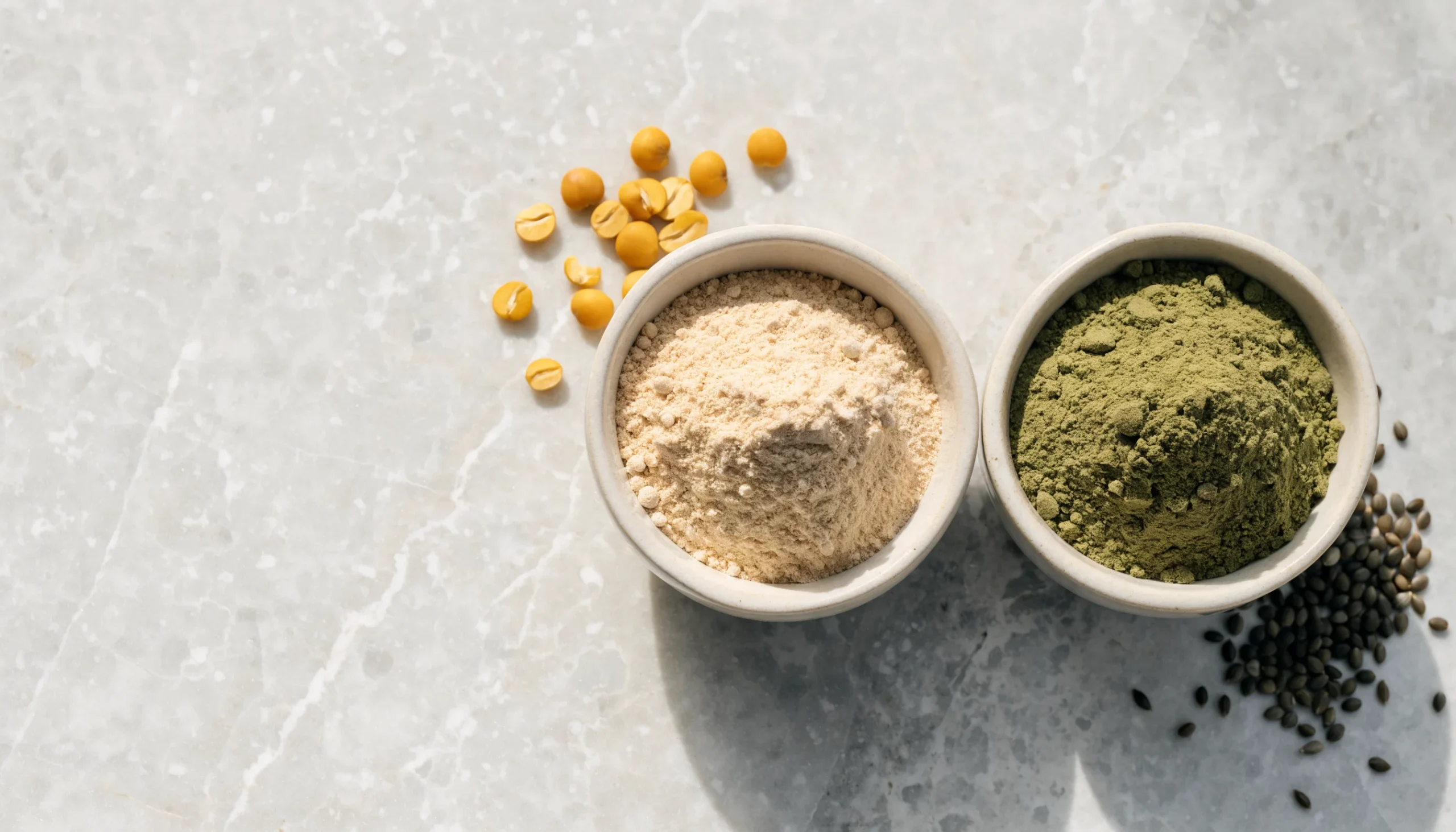

Hemp Protein vs Pea Protein: Which Plant Protein Is Better for You?
Pea protein packs more protein per scoop — about 80-90% protein versus 50-70% for hemp. But hemp brings fibre, omega-3s, minerals, and a cleaner mechanical process to the table. Pea wins on muscle-building amino acids (leucine); hemp wins on whole-food nutrition and allergen-free status. Neither is “better” — it depends whether you want more protein per scoop or more nutrition per scoop.
Hemp and pea are the two most popular plant proteins in the EU right now. One is a cold-pressed seed flour that keeps its fibre and healthy fats. The other is an extracted isolate built around protein density. They look similar in a shaker, but the process and what you get out of them are completely different.
This comparison covers protein content, amino acids, digestibility, taste, environmental footprint, and who should choose which — using the real product data from Nordic Hemp’s hemp protein range.
What’s the difference between hemp and pea protein?
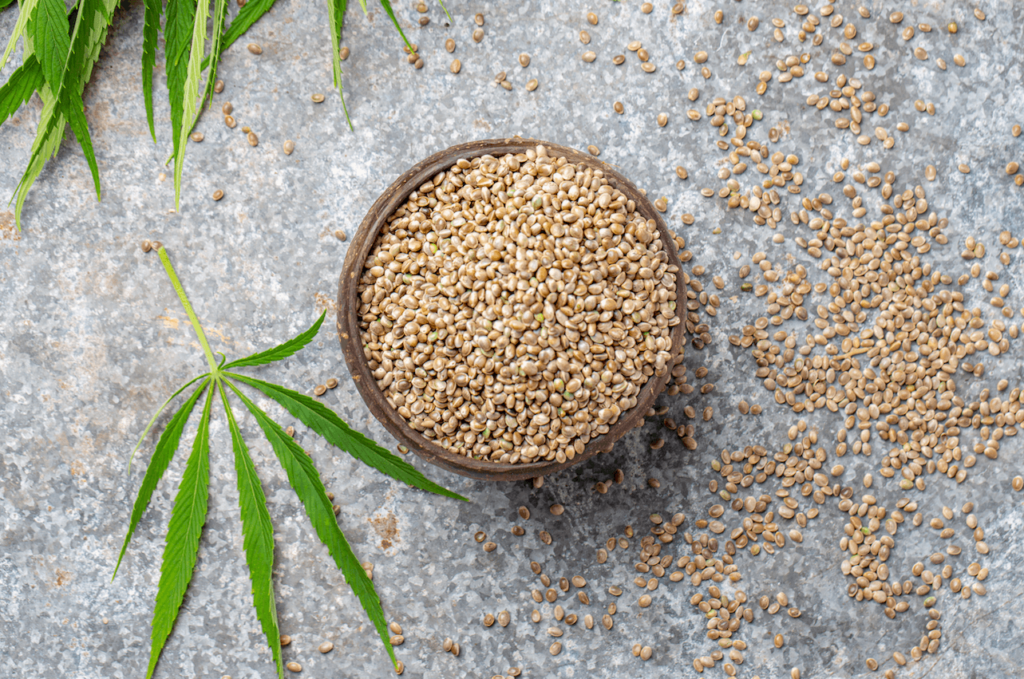
Hemp protein is made by mechanically milling hemp seeds — either the whole seed (50% protein) or the dehulled seed heart (70% protein). Pea protein is made by extracting protein from yellow split peas, typically through a wet process that concentrates the protein to 80-90%.
The core difference: hemp is a minimally processed food ingredient that keeps fibre, fats and minerals; pea is a refined protein concentrate that delivers more protein but leaves most of the rest behind.
How do hemp and pea protein compare nutritionally?
Pea protein isolate contains roughly 80-90% protein by weight, while hemp protein ranges from 50% to 70% depending on the product. A 30 g serving of pea protein gives about 24-27 g of protein; the same serving of hemp gives about 15 g (HP50) or 21 g (HP70).
| Per 100 g | Hemp Protein 50% | Hemp Protein 70% | Pea Protein (typical) |
|---|---|---|---|
| Protein | 50 g | 70.2 g | 80-90 g |
| Energy | 325 kcal | 323 kcal | ~350-400 kcal |
| Fat | 13 g (omega-3/6) | 2 g | ~0.5 g |
| Fibre | 5.4 g | low | ~2 g |
| Sugars | 4.9 g | 3.6 g | ~1-2 g |
| Complete protein | Yes (lysine limiting) | Yes (lysine limiting) | Yes (methionine limiting) |
| Common allergen | No | No | No (legume tolerance varies) |
| Processing | Mechanical, cold-pressed | Mechanical, patented | Wet extraction |
Hemp protein contains more fat and fibre than pea isolate because it is a whole-food product. Those extra grams are the omega-3 fatty acids and fibre that make hemp a “food” rather than just a protein supplement.
Amino acid profiles: where each one falls short
Both are complete proteins with all nine essential amino acids — pea runs lower in methionine and cysteine, hemp runs lower in lysine.
Pea protein has higher levels of the branched-chain amino acids (BCAAs) — especially leucine — which matters for muscle protein synthesis. Hemp has a more balanced everyday profile but less leucine per gram.
That is why the two combine so well: pea’s strength (high leucine and lysine) and hemp’s strength (overall whole-food nutrition) complement each other.
Which one scores higher on protein quality?
Pea protein scores higher on standard protein-quality measures. Its PDCAAS is around 0.89-1.0, close to animal proteins. Hemp typically scores around 0.63-0.66, lower mainly because of its lysine content and higher fibre.
But those scores measure isolated protein. If you eat hemp protein as part of a varied diet — alongside grains, legumes or pea protein — the lysine gap is easily covered. Protein quality scores matter most when a single protein is your only source.
Which is better for muscle building — hemp or pea?
Pea protein is the stronger choice for muscle building. It contains more leucine per serving — the amino acid that triggers muscle protein synthesis — and its PDCAAS is close to whey. That’s why pea isolate is common in sports nutrition.
Hemp protein still supports muscle, but you would need a larger serving to hit the same leucine threshold. For athletes whose only goal is muscle mass, pea wins. For general health and everyday protein, hemp’s extra nutrients close much of the gap.
Digestibility: both gentle, in different ways
Pea protein isolate is highly digestible — typically above 90% — because the extraction process removes most of the fibre that can slow digestion. Hemp protein is also well digested, and most people find it gentler on the stomach.
One advantage of mechanically produced hemp is that it contains no chemical extraction residues. On the Nordic Hemp product page, the 70% protein is described as mechanically produced so the body absorbs it “significantly better than chemically processed proteins.” Both are gentle options; hemp simply keeps more of the whole seed in the mix.
Taste and how to use them
Pea protein has a distinct earthy, slightly “beany” taste that usually needs flavouring or sweetener to mask. Hemp protein has a mild, nutty flavour — and Nordic Hemp’s 70% protein uses a proprietary physical treatment that gives it an even cleaner taste.
Pea isolate mixes smoother into shakes and bars because it has little fibre and fat. Hemp protein works well in baked goods, porridge, smoothies and yoghurt, where its nutty flavour and texture are an advantage.
The environmental footprint
Both are far more sustainable than animal protein. Peas fix their own nitrogen, so they need little synthetic fertiliser. Hemp grows fast, suppresses weeds, and improves soil structure — and it needs minimal pesticides.
Hemp’s whole-plant use is its edge: seeds, oil, protein, fibre and presscake are all used, giving it a near-zero-waste profile. At Nordic Hemp, production is zero-waste and the company grows the raw material itself on over 5,000 hectares of Estonian farmland — so the supply chain is short and traceable from field to finished product.
Can you combine hemp and pea protein?
Yes — and it’s one of the smartest plant-protein moves you can make. The two are complementary: pea provides high leucine and lysine — the amino acid hemp is low in — while hemp brings methionine and cysteine, which pea lacks, plus omega-3s and fibre. Together they round out each other’s amino acid gaps better than either can alone.
Many plant-based blends on the market combine pea and hemp precisely for this reason. If you mix them in a shake, you get the muscle-building power of pea with the whole-food nutrition of hemp in one serving.
For food manufacturers and formulators
For formulators, the choice comes down to what you’re building. Pea isolate is ideal for high-protein sports powders and bars where protein concentration is the goal. Hemp protein suits bakery, porridge, yoghurt, plant-based meat and meal replacements, where its mild flavour, clean label and nutrition story are assets.
Nordic Hemp supplies both hemp protein 50% (25 kg bags, 750 kg per pallet) and hemp protein 70% (20 kg bags, 600 kg per pallet), EU Organic certified, non-GMO, and with a shelf life of 24-36 months. Both are produced mechanically from hemp grown by the company itself, and tested regularly from raw material to final product.
Which one should you choose?
Go with pea protein when your priority is maximum protein per scoop, muscle building, or a smooth neutral base for flavoured sports products.
Hemp protein is the better call if you want whole-food nutrition — protein plus fibre, omega-3s and minerals — a clean mechanical process, allergen-free status, or a gentle plant protein for everyday use.
Use both if you want the best of both worlds: pea’s protein density with hemp’s nutrition, in a blend that covers each other’s amino acid gaps.
Frequently asked questions
Is hemp or pea protein better for you?
It depends on your goal. Pea protein is better for maximum protein per serving and muscle building. Hemp protein is better for whole-food nutrition — it keeps fibre, omega-3s and minerals that pea isolate strips away. Many people use both.
Which has more protein — hemp or pea?
Pea protein has more protein per gram — roughly 80-90% versus 50-70% for hemp. A 30 g serving of pea isolate gives about 24-27 g of protein, while the same serving of hemp protein 50% gives about 15 g and hemp protein 70% about 21 g.
Can I take hemp and pea protein together?
Yes, and it’s recommended. Pea protein is low in methionine, hemp protein is low in lysine — combining them covers both gaps and gives a more complete amino acid profile. Many plant-based blends are built exactly this way.
Is pea or hemp protein better for muscle building?
Pea protein is better for muscle building because it has more leucine — the amino acid that triggers muscle protein synthesis — and a higher PDCAAS. Hemp still supports muscle, but you need a larger serving to match pea’s anabolic response.
Are hemp and pea protein both complete proteins?
Yes, both contain all nine essential amino acids. Pea is lower in methionine and cysteine; hemp is lower in lysine. So both are complete, but each has one limiting amino acid that other foods can cover.
Which is easier to digest — hemp or pea protein?
Both are well digested. Pea isolate digests above 90% because extraction removes most of the fibre. Many people find hemp gentler on the stomach, and mechanically produced hemp contains no chemical extraction residues.
Does hemp protein contain THC?
THC and CBD are naturally present in hemp at trace levels, well below the EU legal limit of 3 mg/kg. Hemp protein made from industrial hemp seed is safe, non-psychoactive and fully legal in the EU.
Looking for hemp protein as an ingredient?
Nordic Hemp produces organic hemp protein 50% and 70% in Estonia. EU Organic certified, mechanically produced, available in bulk for manufacturers worldwide.
View product detailsSources
- Nordic Hemp — Organic Hemp Protein 50% product page (nutritional data, processing, packaging)
- Nordic Hemp — Organic Hemp Protein 70% product page (nutritional data, patented mechanical process)
- Healthline — Hemp Protein Powder: The Best Plant-Based Protein? (amino acid and protein content context)
- NutritionValue.org — Pea Protein Isolate nutrition facts (protein content, amino acid profile, macros per 30 g)
- USDA FoodData Central — hemp seed nutrients (SR Legacy, FDCID 170148)