Hemp Protein vs Soy Protein: Which Plant Protein Is Better for You?

Hemp Protein vs Soy Protein: Which Plant Protein Is Better for You?
Hemp protein delivers complete protein, fibre, omega-3s, and minerals from one minimally processed source. Soy protein isolate offers higher protein density (85-90% vs 50%) and a PDCAAS of 1.0. Choose hemp for whole-food nutrition and gentle digestion. Choose soy for maximum protein per scoop. Many people use both for different parts of their day.
Hemp and soy are the two most established plant proteins on the market. Soy has been the default plant protein for decades — it is the closest plant-based equivalent to whey in terms of protein density. Hemp is the fastest-growing alternative, valued for its whole-food nutritional profile, clean processing, and allergen-free status.
This comparison looks at the full picture: protein content, amino acid profiles, digestibility (PDCAAS and DIAAS), allergens, phytoestrogens, GMO status, environmental impact, and who should choose each.
Hemp and soy come from very different processing paths
The biggest difference is processing. Hemp protein 50% is made by cold-pressing hemp seeds and milling the remaining cake — no solvents, no chemical extraction. Soy protein isolate goes through defatting (often with hexane), alkaline extraction, and acid precipitation to reach 85-90% protein content. That extra processing strips away most of the fibre, fat, and micronutrients.
| Per 30g serving | Hemp Protein 50% | Soy Protein Isolate |
|---|---|---|
| Protein | ~15 g | ~27 g |
| Calories | ~120 | ~110 |
| Fat | ~3.5 g (omega-3/6) | ~0.5 g |
| Fibre | ~8 g | ~1 g |
| Omega-3s | ~0.8 g | ~0 g |
| Complete protein | Yes (lysine limiting) | Yes (PDCAAS 1.0) |
| Common allergen | No (rare) | Yes (top 8 allergens) |
| GMO risk | Extremely low | High without certification |
How do the amino acid profiles compare?
Both are complete proteins — they contain all nine essential amino acids. The ratios are what set them apart. Soy is higher in leucine (the trigger for muscle protein synthesis) and lysine. Hemp is higher in arginine (a precursor to nitric oxide, supporting blood flow) and contains more methionine + cysteine (sulphur amino acids important for antioxidant production).
| Amino acid (g/100g protein) | Hemp Protein | Soy Protein Isolate | WHO/FAO requirement |
|---|---|---|---|
| Leucine | 5.1 | 7.0 | 5.9 |
| Lysine | 2.8 | 4.6 | 4.5 |
| Arginine | 9.2 | 6.5 | — |
| Methionine + Cysteine | 3.0 | 2.4 | 2.2 |
| Phenylalanine + Tyrosine | 6.5 | 6.8 | 3.8 |
| Threonine | 3.3 | 3.1 | 2.3 |
| Valine | 4.5 | 4.0 | 3.9 |
| Isoleucine | 3.6 | 4.1 | 3.0 |
| Histidine | 2.3 | 2.3 | 1.5 |
| Total EAAs | ~40 | ~41 | — |
Sources: van Vliet et al. (2018) PMC6245118 — HPLC-MS/MS analysis of 16 commercial protein isolates; ACS Food Science & Technology (2022) for hemp arginine value.
Hemp’s leucine is below the WHO/FAO threshold, which means it does not trigger muscle protein synthesis as efficiently as soy per gram of protein. However, hemp compensates with significantly higher arginine (good for cardiovascular health) and higher sulphur amino acids. The lysine in hemp is also below the requirement — lysine is the first limiting amino acid in hemp protein (House et al., 2010).
PDCAAS and DIAAS scores show the quality gap
PDCAAS (Protein Digestibility Corrected Amino Acid Score) is the standard measure of protein quality. Soy protein isolate scores 0.92-1.00, the maximum. Hemp protein scores 0.63-0.66 for dehulled hemp hearts, and approximately 0.42-0.51 for whole hemp seed products (Nosworthy et al., 2023).
| Protein source | PDCAAS | DIAAS |
|---|---|---|
| Soy protein isolate | 1.00 | 0.90 |
| Soy protein concentrate | 0.99 | 0.92 |
| Hemp hearts (dehulled) | 0.63-0.66 | 0.45 |
| Hemp seed (whole) | 0.49-0.53 | 0.54 |
| Hemp protein concentrate | 0.42-0.46 | 0.45 |
| Pea protein isolate | 0.72 | 0.82 |
| Whey protein isolate | 1.00 | 1.00 |
Sources: MDPI Plants (2024) — PDCAAS/DIAAS comparison table; House et al. (2010) J. Agric. Food Chem. 58(22), 11801-11807; Nosworthy et al. (2023) PMC10630821.
PDCAAS values close to 1.0 mean the protein is highly digestible and provides all essential amino acids in the right proportions. Hemp’s lower scores are driven by two factors: lower lysine content and the presence of fibre that slightly reduces overall digestibility. DIAAS scores, which use individual amino acid digestibility, are lower for both proteins but confirm the same pattern.
Which one is easier to digest?
Soy protein isolate has excellent digestibility at the protein level — PDCAAS 1.0 reflects that. However, soy contains anti-nutritional factors, including trypsin inhibitors that can interfere with protein absorption if not properly heat-treated. Commercial soy isolates are processed to deactivate these.
Hemp has very low levels of anti-nutritional factors. Its two main storage proteins — edestin and albumin — are highly digestible globular proteins. The high fibre content (~8g per serving) can cause mild bloating in people not used to it, but most adapt within a week.
The key digestive difference is allergen status. Soy is one of the top eight allergens globally. Hemp is not a common allergen — reactions are extremely rare.
Is soy’s phytoestrogen content a concern?
Soy contains isoflavones — a class of phytoestrogens that can weakly mimic estrogen in the body. This has led to concerns about hormonal effects, particularly for men and people with hormone-sensitive conditions.
The scientific picture is more nuanced. Two large umbrella reviews of meta-analyses — covering over 100 studies — found that soy and isoflavone consumption is more beneficial than harmful for most health outcomes, including reduced risk of cardiovascular disease and certain cancers (PMC, 2019)(PMC, 2025). A 2023 MDPI Nutrients review concluded that the effects depend heavily on dose, age, and physiological status (Nutrients, 2023).
For most people, moderate soy consumption (1-2 servings per day) is safe. People with thyroid conditions or a history of estrogen-sensitive cancers should consult their doctor. Hemp contains no phytoestrogens and no hormonal activity.
How do they compare on GMO and environment?
Over 90% of soy grown in the US is genetically modified. EU-grown soy is generally non-GMO, but much of the soy on the global market is GM unless certified organic or Non-GMO Verified. Hemp is naturally non-GMO — there are no GM hemp varieties in commercial production.
| Environmental factor | Hemp | Soy |
|---|---|---|
| Water use | Low — deep taproot | Moderate to high |
| Pesticide needs | Very low (naturally resistant) | High — often treated |
| GMO risk | None (no GM varieties) | High without certification |
| Soil health | Improves (phytoremediation) | Depletes — requires rotation |
| Deforestation link | Minimal | Major — Amazon soy farming |
Taste and texture
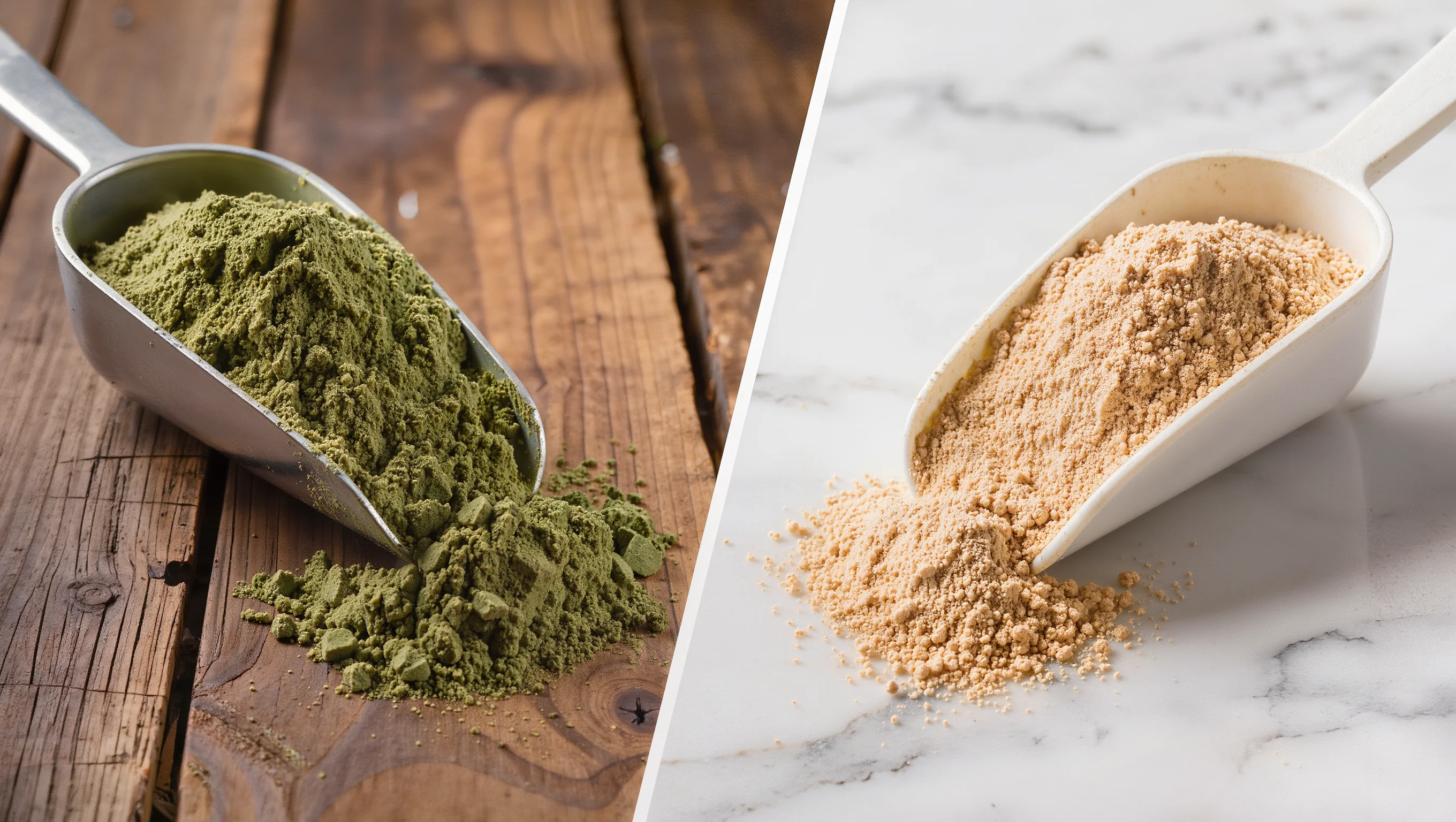
Hemp protein has a nutty, earthy taste and a slightly grainy texture. It works well in smoothies, oatmeal, and baked goods where the flavour complements the recipe. Soy isolate has a neutral, mild taste with a smooth texture — it blends into most applications without altering flavour much.
Which one should you choose?
Here is the short version:
- Choose hemp if you want minimally processed, whole-food protein with fibre and omega-3s. Great for daily nutrition, sensitive digestion, and anyone avoiding soy, dairy, or GMOs.
- Choose soy if your priority is maximum protein per scoop and a leucine-rich amino profile for post-workout recovery.
- Use both — hemp in the morning for whole-food nutrition, soy after training for the protein density. They complement each other well.
B2B and manufacturing considerations
For food manufacturers, the choice goes beyond nutrition:
- Hemp protein works best in whole-food formulations — nutritional bars, smoothie mixes, baked goods. It retains natural fats (13%) that contribute to texture and mouthfeel. The nutty flavour is a feature in some applications, a challenge in others.
- Soy protein isolate is the most functional plant protein on the market — excellent emulsification, gelation, and water binding. It works in everything from RTD beverages to meat analogues. But it carries allergen labelling requirements and faces growing consumer scepticism about GMOs and processing methods.
- Blending is an option. Hemp’s high arginine and sulphur amino acids complement pea or rice protein well. Some manufacturers blend hemp with soy to improve the fatty acid profile while keeping costs manageable.
Nordic Hemp’s HP50 is BRCGS-certified, EU Organic, and produced in Estonia with full traceability from field to finished ingredient.
Which plant protein is the healthiest overall?
That depends on how you define “healthy.” If you rank by protein density and leucine content, soy wins. If you rank by nutrient diversity (protein + fibre + omega-3s + minerals + no allergens), hemp wins. If you rank by environmental footprint, hemp leads. Many nutritionists now recommend rotating between plant proteins rather than relying on one source.
Frequently asked questions
Is soy or hemp protein better for building muscle?
Soy has a clear edge for muscle building. It has higher leucine (7.0 vs 5.1 g/100g protein) and a PDCAAS of 1.0, meaning more of the protein you eat gets used for muscle synthesis. Hemp is complete but has less leucine per gram — you would need a larger serving to trigger the same anabolic response. Combining hemp with other high-leucine proteins (pea, rice) can bridge the gap.
Does soy protein affect testosterone in men?
The evidence says no for moderate consumption. A 2021 meta-analysis found no significant effect of soy protein or isoflavones on testosterone levels in men. The concerns are largely based on rodent studies that do not translate to humans, since rodent metabolism of isoflavones differs significantly from human metabolism.
Is hemp protein safe for people with soy allergy?
Yes. Hemp is not a common allergen and is naturally free of the nine major allergens (soy, dairy, eggs, wheat, peanuts, tree nuts, fish, shellfish, sesame). It is one of the safest protein choices for people with food allergies.
Which has more protein per 100g — hemp or soy?
Soy protein isolate typically contains 85-90g protein per 100g. Hemp protein 50% contains 50g per 100g. Soy concentrate (70% protein) sits in between. Hemp concentrate (65-70% protein) is less common but available from some processors.
Does soy cause bloating?
Soy can cause digestive discomfort in some people due to oligosaccharides (raffinose, stachyose) that ferment in the gut. Soy isolate has less of these than whole soybeans but still triggers issues in sensitive individuals. Hemp’s digestive side effect is the opposite — bloating from fibre, which typically resolves as the gut adjusts.
Can I use hemp and soy protein together?
Absolutely. They complement each other well — hemp brings fibre and omega-3s that soy lacks, while soy brings higher leucine and lysine that hemp is lower in. Many manufacturers blend them to create a more balanced nutritional profile.
Is soy protein GMO?
Over 90% of soy grown in the US is genetically modified. In the EU, GM soy is strictly regulated and labelled. If GMO avoidance is important, look for certified organic or Non-GMO Verified labels. Hemp is naturally non-GMO — no GM hemp varieties exist.
Ready to try hemp protein?
Nordic Hemp produces organic hemp protein 50% in Estonia. EU Organic certified, lab tested, available in 25 kg bags for manufacturers worldwide.
View product detailsSources
- USDA FoodData Central — Seeds, hemp seed, hulled (SR Legacy, FDC ID 170148)
- van Vliet et al. (2018). Protein content and amino acid composition of commercially available plant-based protein isolates. PMC6245118
- Nosworthy et al. (2023). The in vivo and in vitro protein quality of three hemp protein sources. PMC10630821
- House et al. (2010). Evaluating the quality of protein from hemp seed products through PDCAAS. J. Agric. Food Chem. 58(22), 11801-11807
- MDPI Plants (2024). Exploring the Nutritional Potential and Functionality of Hemp and Rapeseed Proteins. Table 1 — PDCAAS/DIAAS comparison
- ACS Food Science & Technology (2022). Physicochemical, Structural, and Functional Properties of Hemp Protein vs Soy, Pea, Whey, and Egg Proteins
- Soy and Isoflavone Consumption and Multiple Health Outcomes: Umbrella Review of Meta-Analyses (2019). PMC